ChipApex | Global Electronic Components Supplier

SEARCH
Search Product
Search Post
— IC芯片 | 连接器 | 传感器 | 被动器件 —
Search productSearch post
— IC芯片 | 连接器 | 传感器 | 被动器件 —
Consult the customer manager about the wholesale price.
consultation hotline:86-132-6715-2157
email:[email protected]
Contact the product manager for consultation. One-stop consultation is available.
Do you want a lower wholesale price? Please send us your inquiry and we will reply immediately.
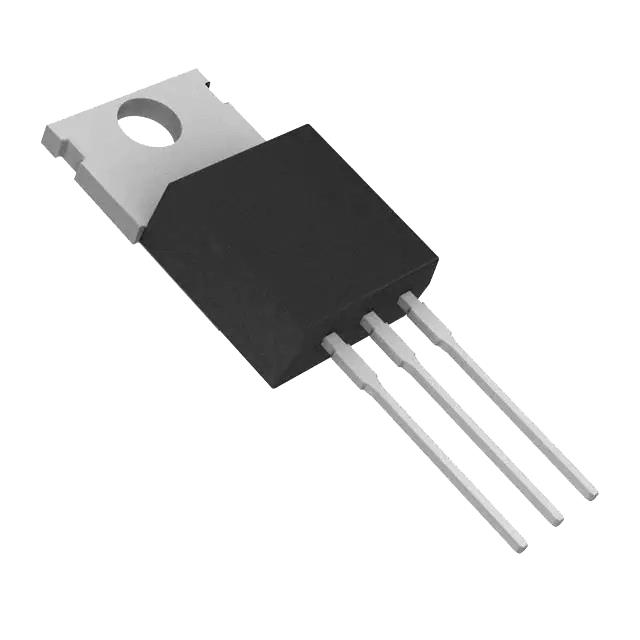
The BUK752R3-40E is a standard level N-channel MOSFET utilizing TrenchMOS technology, housed in a TO-220AB (SOT78A) package. It features a drain-source voltage of 40 V and a continuous drain current of 120 A at 25 °C mounting base temperature. The device supports a total power dissipation of 293 W under the same conditions. Key electrical parameters include a maximum on-state resistance of 2.3 mΩ at 25 °C and 4.4 mΩ at 175 °C, with a gate threshold voltage exceeding 1 V at high temperatures.
Verify the specific ordering suffix matches the required package variant, as the datasheet specifies the SOT78A version. Confirm that the application design accounts for the thermal resistance from junction to mounting base when calculating heat sink requirements. Ensure the input drive voltage aligns with the standard level gate specifications to achieve the rated on-state resistance values provided in the static characteristics tables.
Select this component for designs requiring robust automotive-grade reliability and high current handling capabilities within a 40 V system. The TO-220AB package facilitates direct heatsink mounting, making it suitable for applications where efficient thermal management is critical. Consider the repetitive avalanche rating if the circuit topology involves inductive loads or potential voltage spikes during switching transitions.
This device belongs to Nexperia's TrenchMOS family, which employs advanced planar trench technology to optimize the trade-off between on-resistance and switching performance. The BUK752R3-40E specifically targets the standard level gate segment, offering compatibility with conventional logic drivers while maintaining low conduction losses typical of modern power MOSFET architectures designed for automotive durability.
Direct substitutes must match the 40 V rating, 120 A current capacity, and TO-220AB package. Verify that any alternative device meets AEC-Q101 qualifications if automotive compliance is mandatory. Check pinout compatibility and thermal resistance specifications to ensure equivalent performance in existing board layouts without redesigning the cooling infrastructure.
 BUK752R3-40E,127

The activity of extra discounts on wholesale prices is in full swing…
Please fill in your contact information and we will send you the latest wholesale price list.