ChipApex | Global Electronic Components Supplier
SEARCH
Search Product
Search Post
— IC芯片 | 连接器 | 传感器 | 被动器件 —
Search productSearch post
— IC芯片 | 连接器 | 传感器 | 被动器件 —
Consult the customer manager about the wholesale price.
consultation hotline:86-132-6715-2157
email:[email protected]
Contact the product manager for consultation. One-stop consultation is available.
Do you want a lower wholesale price? Please send us your inquiry and we will reply immediately.
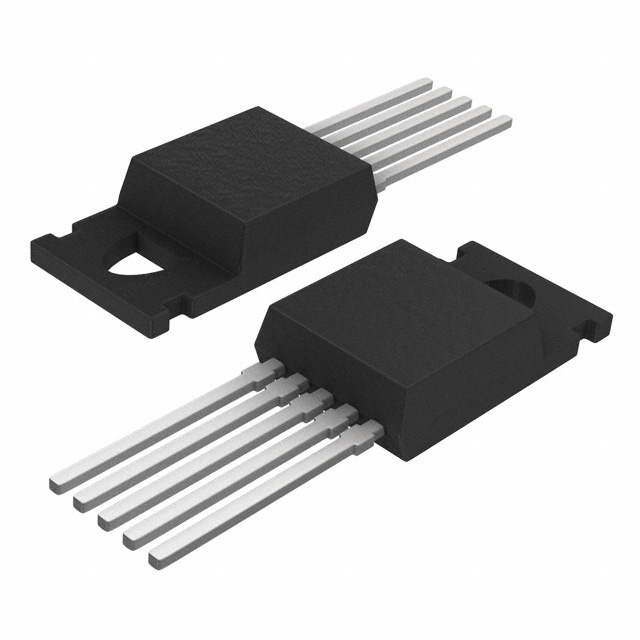
The BUK9907-40ATC,127 is an N-channel TrenchPLUS logic level FET utilizing TrenchMOS technology. It features a TO-220 (SOT263B) package with five leads and a mounting base connected to the drain. Key electrical parameters include a drain-source voltage of 40 V, a continuous drain current of 75 A at 25 °C, and a maximum total power dissipation of 272 W. The device exhibits a typical on-state resistance of 5.8 mΩ at VGS = 5 V and ID = 50 A. It incorporates integrated TrenchPLUS diodes for clamping, ESD protection, and temperature sensing, meeting Q101 automotive standards.
Verify component authenticity against official Nexperia documentation before integration. Confirm that the specific ordering suffix matches the required package variant. Ensure design parameters remain within absolute maximum ratings to prevent permanent damage. Check for any recent product change notices regarding manufacturing sites or materials. Validate compliance with relevant regional regulatory standards prior to final implementation.
Select this component for applications requiring robust automotive-grade performance in high-current environments. The integrated temperature sensing feature simplifies thermal management strategies. Verify that gate drive voltages align with the logic level requirements for optimal on-state resistance. Consider the TO-220 package constraints for heatsinking and mechanical mounting in the final assembly design.
This part belongs to the Nexperia BUK99 series of N-channel enhancement mode Field-Effect Transistors. It utilizes TrenchMOS technology to deliver high efficiency and reliability. The device is designed and qualified according to AEC standards for critical automotive applications. It serves as a specialized solution for power switching tasks requiring integrated protection and sensing capabilities.
Consult official Nexperia documentation for verified substitute part numbers. Do not assume cross-compatibility with other manufacturers' devices without rigorous testing. Verify pinout and thermal characteristics match the existing design constraints.
 BUK9907-40ATC,127
The activity of extra discounts on wholesale prices is in full swing…
Please fill in your contact information and we will send you the latest wholesale price list.