ChipApex | Global Electronic Components Supplier
SEARCH
Search Product
Search Post
— IC芯片 | 连接器 | 传感器 | 被动器件 —
Search productSearch post
— IC芯片 | 连接器 | 传感器 | 被动器件 —
Consult the customer manager about the wholesale price.
consultation hotline:86-132-6715-2157
email:[email protected]
Contact the product manager for consultation. One-stop consultation is available.
Do you want a lower wholesale price? Please send us your inquiry and we will reply immediately.
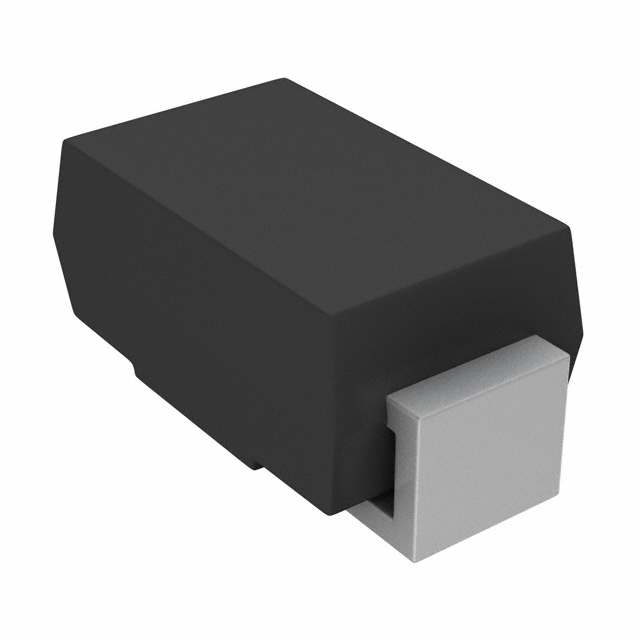
The BYG20G is a single-phase standard recovery rectifier manufactured by Taiwan Semiconductor. It features a maximum average forward rectified current of 1.5 A and a maximum repetitive peak reverse voltage of 400 V. The device exhibits a maximum instantaneous forward voltage of 1.4 V at rated current and a typical reverse recovery time of 75 ns. It supports a non-repetitive peak forward surge current of 30 A and maintains a low reverse leakage current of 10 µA. The component operates within a junction temperature range of -55 °C to +150 °C and utilizes the DO-214AC (SMA) surface-mount package.
Verify the specific suffix against the manufacturer's latest documentation, as part numbers may undergo revisions or obsolescence changes. Confirm RoHS compliance status and halogen-free requirements with the supplier prior to ordering. Ensure the procurement channel provides valid traceability for the semiconductor batch. Cross-reference the exact ordering code with official datasheets to avoid substitution errors during production integration.
Select this component when a 400 V blocking voltage and 1.5 A continuous current rating are required in a compact SMA package. The 75 ns reverse recovery time makes it suitable for applications demanding faster switching than standard rectifiers but without the complexity of ultra-fast variants. Consider the thermal resistance and operating temperature limits for heat dissipation planning in enclosed designs.
This device belongs to the BYG series of high-efficient surface mount rectifiers from Taiwan Semiconductor. The series covers voltage ratings from 200 V to 600 V, all sharing the DO-214AC footprint. These components utilize glass passivation technology to ensure stability under varying environmental conditions and are designed to meet international environmental directives for electronic materials.
Compatible substitutes include other 1.5 A, 400 V SMA rectifiers such as the MBRB1545CT or similar BYG series variants like BYG20D or BYG20J, provided the reverse recovery time and forward voltage specifications align with the circuit design requirements.
 BYG20G
The activity of extra discounts on wholesale prices is in full swing…
Please fill in your contact information and we will send you the latest wholesale price list.