 ChipApex | Global Electronic Components Supplier
SEARCH
Search Product
Search Post
— IC芯片 | 连接器 | 传感器 | 被动器件 —
Search productSearch post
— IC芯片 | 连接器 | 传感器 | 被动器件 —
Consult the customer manager about the wholesale price.
consultation hotline:86-132-6715-2157
email:[email protected]
Contact the product manager for consultation. One-stop consultation is available.
Do you want a lower wholesale price? Please send us your inquiry and we will reply immediately.
The BYG21MHM3_A/I is a fast avalanche rectifier manufactured by Vishay General Semiconductor. It utilizes glass passivation for the junction and is housed in a DO-214AB (SMC) surface-mount package. The device supports a maximum repetitive peak reverse voltage of 1000 V and an average forward rectified current of 1.5 A. Key electrical characteristics include a maximum non-repetitive peak forward surge current of 30 A, a maximum forward voltage of 1.5 V, and a maximum reverse recovery time of 0.12 µs. It operates within a junction temperature range of -55 °C to 150 °C and meets AEC-Q101 automotive qualification standards.
Verify the specific suffix HM3 against official Vishay documentation to confirm RoHS compliance and halogen-free status. Ensure the ordering code matches the required DO-214AB package variant. Confirm availability through authorized distributors as stock levels fluctuate. Cross-reference the datasheet revision date to ensure compatibility with current manufacturing processes and environmental directives.
Select this component when high voltage isolation up to 1000 V is required alongside fast switching speeds. The 1.5 A current rating suits moderate power applications where space constraints favor the SMC package. Consider the avalanche ruggedness for inductive load switching environments. Verify thermal management requirements given the 150 °C maximum junction temperature limit.
This part belongs to Vishay's BYG series of fast avalanche rectifiers designed for robust performance in demanding electronic circuits. The HM3 suffix indicates a lead-free, halogen-free compliant version. It serves as a surface-mount alternative to through-hole equivalents, offering improved automation compatibility while maintaining high voltage blocking capabilities typical of the broader BYG family.
Consult official Vishay substitution guides for direct replacements. Generic equivalents may lack the specific avalanche rating or AEC-Q101 qualification. Verify pinout compatibility and thermal resistance differences before integrating substitute components into existing designs.
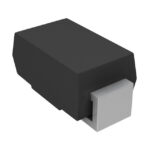 BYG21MHM3_A/I
The activity of extra discounts on wholesale prices is in full swing…
Please fill in your contact information and we will send you the latest wholesale price list.





