 ChipApex | Global Electronic Components Supplier
SEARCH
Search Product
Search Post
— IC芯片 | 连接器 | 传感器 | 被动器件 —
Search productSearch post
— IC芯片 | 连接器 | 传感器 | 被动器件 —
Consult the customer manager about the wholesale price.
consultation hotline:86-132-6715-2157
email:[email protected]
Contact the product manager for consultation. One-stop consultation is available.
Do you want a lower wholesale price? Please send us your inquiry and we will reply immediately.
The C8051F300-GMR is a mixed-signal ISP Flash microcontroller from Silicon Labs, featuring a high-speed 25 MIPS CIP-51 core operating at up to 25 MHz. It integrates 8 kB of in-system programmable Flash memory and 256 bytes of internal data RAM. The device includes an 8-bit ADC with up to 500 ksps throughput, eight external inputs, and a programmable comparator. Supply voltage ranges from 2.7 V to 3.6 V, with typical operating current of 6.6 mA at 25 MHz and 14 μA at 32 kHz. It operates within a temperature range of –40 °C to +85 °C and is housed in an 11-pin QFN package measuring 3x3 mm.
Verify the component status before procurement, as the datasheet explicitly marks this family as Not Recommended for New Designs. Confirm that the specific GMR suffix corresponds to the required 11-pin QFN package variant. Ensure design constraints accommodate the specified 2.7 V to 3.6 V supply voltage range and the -40 °C to +85 °C operating temperature limits.
Select this component when a compact 8-bit mixed-signal MCU with integrated analog peripherals is required. The C8051F300 is suitable for applications needing an 8-bit ADC and programmable comparator within a small footprint. Consider alternative models from the same family if different memory sizes or pin counts are necessary, noting that all variants share similar core architectures.
The C8051F300 belongs to the C8051F30x series of mixed-signal ISP Flash MCUs by Silicon Labs. This family shares a common CIP-51 core and peripheral set, differing primarily in Flash size, RAM capacity, and available analog features. The GMR suffix denotes the specific 11-pin QFN package configuration used in space-constrained designs.
Publicly confirmed substitute part numbers are not provided in the source documentation. Designers should consult Silicon Labs for recommended replacements due to the 'Not Recommended for New Designs' status.
Yes, it includes on-chip debug circuitry that facilitates full-speed, non-intrusive in-system debugging without requiring an emulator.
The device supports a maximum system clock frequency of 25 MHz, achieving up to 25 MIPS throughput.
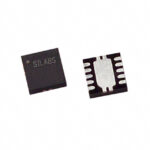 C8051F300-GMR
The activity of extra discounts on wholesale prices is in full swing…
Please fill in your contact information and we will send you the latest wholesale price list.





