 ChipApex | Global Electronic Components Supplier
SEARCH
Search Product
Search Post
— IC芯片 | 连接器 | 传感器 | 被动器件 —
Search productSearch post
— IC芯片 | 连接器 | 传感器 | 被动器件 —
Consult the customer manager about the wholesale price.
consultation hotline:86-132-6715-2157
email:[email protected]
Contact the product manager for consultation. One-stop consultation is available.
Do you want a lower wholesale price? Please send us your inquiry and we will reply immediately.
The C8051F381-GM is an 8-bit microcontroller from Silicon Labs, part of the C8051F38x family. It features a high-speed 8051 core operating at up to 48 MIPS with a maximum clock frequency of 48 MHz. The device integrates 64 kB of in-system programmable Flash memory and 4.25 kB of RAM. Key peripherals include a full-speed USB 2.0 function controller with integrated transceiver, a 10-bit ADC supporting up to 500 ksps, two comparators, and multiple digital communication interfaces such as SPI, I2C/SMBus, and UARTs. It operates within a voltage range of 2.7 V to 5.25 V using on-chip regulators and is available in a 32-pin QFN package.
Verify the specific suffix 'GM' corresponds to the 32-pin QFN package variant when sourcing. Confirm that the component meets the required industrial temperature range specifications for your application environment. Ensure compatibility with existing PCB footprints designed for the 5x5 mm QFN form factor. Cross-reference the datasheet revision to confirm peripheral availability matches your design requirements.
Select this model if your design requires integrated USB functionality without external PHY components. Consider the 64 kB Flash capacity for complex firmware implementations. Evaluate the 10-bit ADC resolution against your signal conditioning needs. Verify that the 48 MHz processing speed aligns with your real-time control requirements and power consumption constraints.
This component belongs to the C8051F38x series of mixed-signal microcontrollers. It shares architectural similarities with the C8051F34x family but offers enhanced performance and additional memory resources. The device is designed for applications requiring high integration and low component count. It utilizes the CIP-51 instruction set architecture for improved execution speed compared to standard 8051 cores.
Check for direct pin-compatible alternatives within the same C8051F38x family, such as variants with different memory sizes. Verify software compatibility if migrating between devices with differing peripheral configurations. Ensure any substitute maintains the required USB controller and package type specifications.
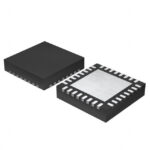 C8051F381-GM
The activity of extra discounts on wholesale prices is in full swing…
Please fill in your contact information and we will send you the latest wholesale price list.






