 ChipApex | Global Electronic Components Supplier
SEARCH
Search Product
Search Post
— IC芯片 | 连接器 | 传感器 | 被动器件 —
Search productSearch post
— IC芯片 | 连接器 | 传感器 | 被动器件 —
Consult the customer manager about the wholesale price.
consultation hotline:86-132-6715-2157
email:[email protected]
Contact the product manager for consultation. One-stop consultation is available.
Do you want a lower wholesale price? Please send us your inquiry and we will reply immediately.
The C8051T323-GMR is a high-speed 8-bit microcontroller from Silicon Labs, featuring an EPROM-based code memory architecture. It integrates a full-speed USB 2.0 function controller with an on-chip transceiver and clock recovery, eliminating the need for external components. The device utilizes a pipelined CIP-51 core capable of up to 48 MIPS throughput at a 48 MHz clock frequency. Key peripherals include two enhanced UARTs, hardware-enhanced SPI, SMBus, four 16-bit timers, and a 16-bit Programmable Counter Array (PCA). Supply voltage ranges from 1.8 V to 5.25 V, supporting operation in temperatures from -40 °C to +85 °C.
Verify component authenticity through authorized distributors or official Silicon Labs channels. Confirm package type matches design requirements, as variants exist in QFN and LQFP formats. Check revision status, as this family may carry 'Not Recommended for New Designs' notices. Ensure ESD protection protocols are followed during handling. Validate supply voltage specifications against target application constraints before integration.
Select this model when EPROM reprogrammability is required over Flash architectures. Consider the integrated USB controller for cost-sensitive designs avoiding external PHYs. Evaluate pin count and peripheral needs against available GPIO resources. Assess power consumption profiles across different clock speeds and sleep modes. Verify compatibility with existing development tools and debug interfaces like C2.
This component belongs to the C8051T3xx series, designed for mixed-signal applications. It shares architectural similarities with the C8051F and C8051T6xx families but distinguishes itself through EPROM storage technology. The series targets developers needing robust in-system debugging and flexible peripheral mapping within a compact footprint.
Direct substitutes include other members of the C8051T3xx family such as C8051T320, C8051T321, or C8051T322, provided pinouts and specific peripheral configurations align. Cross-referencing datasheets for exact memory sizes and I/O counts is essential. Alternative solutions may involve migrating to newer Silicon Labs MCU families if EPROM is not strictly necessary.
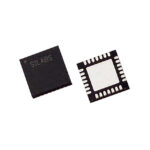 C8051T323-GMR
The activity of extra discounts on wholesale prices is in full swing…
Please fill in your contact information and we will send you the latest wholesale price list.







