 ChipApex | Global Electronic Components Supplier
SEARCH
Search Product
Search Post
— IC芯片 | 连接器 | 传感器 | 被动器件 —
Search productSearch post
— IC芯片 | 连接器 | 传感器 | 被动器件 —
Consult the customer manager about the wholesale price.
consultation hotline:86-132-6715-2157
email:[email protected]
Contact the product manager for consultation. One-stop consultation is available.
Do you want a lower wholesale price? Please send us your inquiry and we will reply immediately.
The CAP1208-1-A4-TR is an eight-channel capacitive touch sensor controller manufactured by Microchip Technology. It features programmable sensitivity, automatic recalibration for parasitic capacitance, and multiple pattern touch recognition. The device operates on a 3V to 5.5V supply with typical standby current of 50µA and deep sleep current of 5µA. It communicates via SMBus/I2C at frequencies up to 400kHz using the fixed address 0101_000. The component is housed in a 14-pin SOIC package and supports operation across a temperature range of -40°C to 125°C.
Verify the ordering suffix '-A4' against official documentation to confirm specific packaging or tape-and-reel specifications. Ensure the host system utilizes the SMBus address 0101_000(r/w) compatible with the CAP1208-1 variant. Confirm that the application environment remains within the specified -40°C to 125°C operating temperature range for reliable performance.
Select this component when an eight-channel capacitive touch solution with low power consumption is required. The CAP1208-1 variant is defined by its specific SMBus address configuration. Consider the 14-pin SOIC package for surface mount assembly requirements. Evaluate the need for multiple pattern detection and press-and-hold features for volume control applications before finalizing the design.
The CAP1208 belongs to Microchip's family of capacitive touch sensor controllers designed for multi-button interfaces. This specific model provides eight independent channels with individual threshold settings. The device integrates analog filtering and RF detection to ensure robust performance in noisy environments while maintaining low power consumption through configurable sensing cycles.
The CAP1208-2 is a functional alternative within the same family but utilizes a different SMBus address (0101_001). Verify software compatibility regarding address changes if substituting between variants. Other models in the series may offer different channel counts or package options but require validation of electrical and interface specifications.
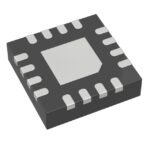 CAP1208-1-A4-TR
The activity of extra discounts on wholesale prices is in full swing…
Please fill in your contact information and we will send you the latest wholesale price list.







