 ChipApex | Global Electronic Components Supplier
SEARCH
Search Product
Search Post
— IC芯片 | 连接器 | 传感器 | 被动器件 —
Search productSearch post
— IC芯片 | 连接器 | 传感器 | 被动器件 —
Consult the customer manager about the wholesale price.
consultation hotline:86-132-6715-2157
email:[email protected]
Contact the product manager for consultation. One-stop consultation is available.
Do you want a lower wholesale price? Please send us your inquiry and we will reply immediately.
The CBTL02043ABQ,115 is a 3.3 V, two differential channel, 2-to-1 multiplexer/demultiplexer switch designed for USB 3.1 and PCI Express Generation 3 applications. It operates within a supply voltage range of 3.0 V to 3.6 V and supports signal switching up to 10 Gbps. The device features a -3 dB bandwidth of 10 GHz, with an on-state resistance maximum of 6 Ohms and a propagation delay of 60 ps. It utilizes a DHVQFN20 package (SOT764-1) with dimensions of 2.5 x 4.5 x 0.85 mm. Operating temperatures range from -40 °C to +85 °C, and it includes a shutdown pin that reduces standby current to less than 1 µA.
Verify the specific ordering suffix ',115' corresponds to the reel packing method as documented in the official NXP data sheet. Confirm the component status is active, as some variants in this family may be marked as no longer manufactured. Ensure the DHVQFN20 package version matches the required PCB footprint specifications for thermal and electrical performance.
Select the CBTL02043ABQ variant when input and output pins are located on opposite sides of the package, which is suitable for edge connectors with different signal sources on the motherboard. Verify that the application requires a 3.3 V supply and benefits from the low insertion loss characteristics at 4.0 GHz. Ensure the design accommodates the exposed center pad for proper grounding and heat dissipation.
This component belongs to the CBTL02043A/B series of multiplexer switches. It is distinct from the CBTL02042ABQ, which is optimized for PCI Express Gen2. The 'A' designation indicates a specific pinout configuration where ports A and B/C are arranged on opposite sides of the DHVQFN20 package, differing from the 'B' variant which has outputs on both sides.
Public confirmed substitute part numbers: None identified in verified documentation.
The XSD pin is a shutdown input. When driven HIGH, it places all channels in a high-impedance state and minimizes supply current consumption. When LOW, the device operates normally.
The SEL pin selects the operation mode. A LOW level connects Port A to Port B, while a HIGH level connects Port A to Port C.
The typical intra-pair skew is 5 ps.
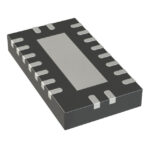 CBTL02043ABQ,115
The activity of extra discounts on wholesale prices is in full swing…
Please fill in your contact information and we will send you the latest wholesale price list.





