 ChipApex | Global Electronic Components Supplier
SEARCH
Search Product
Search Post
— IC芯片 | 连接器 | 传感器 | 被动器件 —
Search productSearch post
— IC芯片 | 连接器 | 传感器 | 被动器件 —
Consult the customer manager about the wholesale price.
consultation hotline:86-132-6715-2157
email:[email protected]
Contact the product manager for consultation. One-stop consultation is available.
Do you want a lower wholesale price? Please send us your inquiry and we will reply immediately.
The CC-WMX-ZC6D-L1 is a Digi ConnectCore 6 Dual Lite System on Module (SOM) designed for embedded applications. It utilizes the NXP i.MX 6DualLite processor featuring dual Arm Cortex-A9 cores operating up to 800 MHz and an integrated Arm Cortex-M4 core running at 200 MHz. The module supports DDR3 memory and includes integrated wireless capabilities via an onboard transceiver supporting 802.11 b/g/n Wi-Fi and Bluetooth 4.0. It provides extensive I/O interfaces including Ethernet, USB, UART, SPI, and I2C, packaged in a compact form factor suitable for industrial environments.
Verify the specific hardware revision and wireless certification status before procurement. Confirm that the required operating temperature range matches the industrial grade specifications of this SOM variant. Ensure compatibility with the chosen carrier board design regarding pin mapping and power requirements. Check for any recent product change notifications affecting component sourcing or firmware support timelines.
Select this module when both application-level processing and deterministic real-time tasks are required within a single system. The integrated wireless solution reduces bill-of-materials complexity compared to discrete components. Consider the thermal performance characteristics if the enclosure design limits passive cooling options. Evaluate the available software development tools and Linux BSP support maturity for the target operating system.
This System on Module belongs to the Digi ConnectCore 6 family, which is built around the NXP i.MX 6 series processors. These modules are engineered to accelerate time-to-market for embedded products by providing a pre-certified wireless and computing platform. The family targets industries such as healthcare, transportation, and industrial IoT where reliability and security are paramount.
Direct replacements include other variants within the ConnectCore 6 family such as the CC-WMX-ZC6D-L2 for different wireless configurations or the CC-WMX-ZC6Q series for higher processing power. Verify mechanical footprint compatibility with existing carrier boards when switching between different processor counts or memory capacities within the same generation.
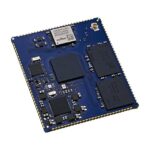 CC-WMX-ZC6D-L1
The activity of extra discounts on wholesale prices is in full swing…
Please fill in your contact information and we will send you the latest wholesale price list.






