ChipApex | Global Electronic Components Supplier
SEARCH
Search Product
Search Post
— IC芯片 | 连接器 | 传感器 | 被动器件 —
Search productSearch post
— IC芯片 | 连接器 | 传感器 | 被动器件 —
Consult the customer manager about the wholesale price.
consultation hotline:86-132-6715-2157
email:[email protected]
Contact the product manager for consultation. One-stop consultation is available.
Do you want a lower wholesale price? Please send us your inquiry and we will reply immediately.
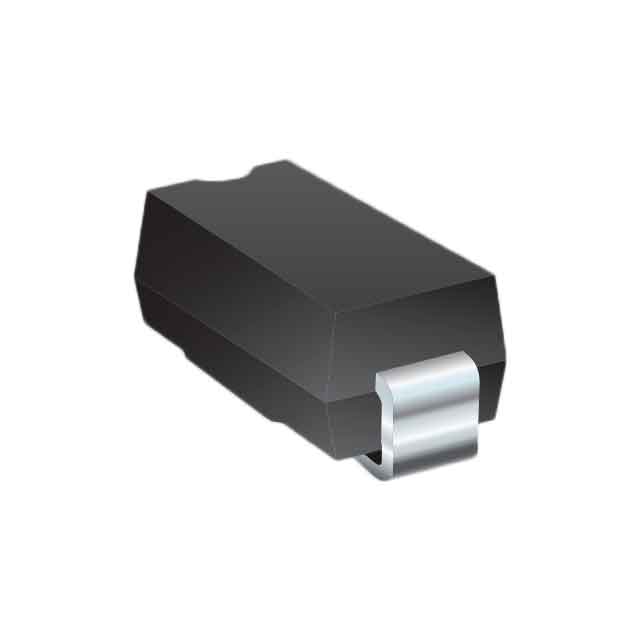
The CD214A-S1D is a glass passivated rectifier chip diode from the CD214A-S1x series, manufactured by Bourns Inc. It operates within a compact SMA (DO-214AC) compatible package and provides a maximum average forward rectified current of 1 A with a repetitive peak reverse voltage rating of 200 V. The device supports a maximum peak forward surge current of 30 A and functions across an operating junction temperature range of -65 to +175 °C. Electrical characteristics include a typical instantaneous forward voltage of 0.94 V at 1 A, a DC reverse current of 0.10 µA at rated voltage, and a typical junction capacitance of 12 pF.
Verify component authenticity through authorized Bourns distributors or direct channels. Confirm datasheet revision status prior to implementation. Ensure storage conditions align with moisture sensitivity level requirements. Validate that the specific application environment does not exceed absolute maximum ratings. Review legal disclaimers regarding high-risk usage constraints before deployment.
Select this component when a 200 V reverse voltage rating is required alongside a 1 A continuous forward current capacity. The SMA package offers a footprint alternative to traditional axial leads. Consider thermal resistance values during circuit layout planning. Verify compatibility with standard surface mount assembly processes. Evaluate junction capacitance requirements for high-frequency signal paths.
This part belongs to the CD214A-S1x series of glass passivated rectifiers. The series covers various voltage ratings from 200 V to 1600 V using consistent packaging. These components address industry demands for miniaturization in portable electronics. They serve as silicon diodes with minimal packaging overhead compared to legacy technologies.
Compatible substitutes include other SMA packaged 1 A rectifiers with equal or higher voltage ratings. Verify pinout compatibility and physical dimensions before substitution. Ensure replacement parts meet identical RoHS and UL certification standards. Check forward voltage and leakage current specifications against original design margins.
 CD214A-S1D
The activity of extra discounts on wholesale prices is in full swing…
Please fill in your contact information and we will send you the latest wholesale price list.