ChipApex | Global Electronic Components Supplier
SEARCH
Search Product
Search Post
— IC芯片 | 连接器 | 传感器 | 被动器件 —
Search productSearch post
— IC芯片 | 连接器 | 传感器 | 被动器件 —
Consult the customer manager about the wholesale price.
consultation hotline:86-132-6715-2157
email:[email protected]
Contact the product manager for consultation. One-stop consultation is available.
Do you want a lower wholesale price? Please send us your inquiry and we will reply immediately.
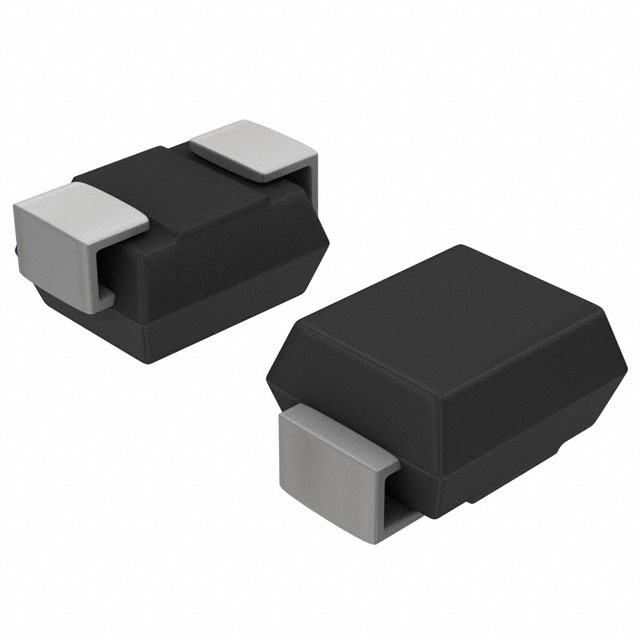
The CD214B-F350 is a surface mount fast response rectifier manufactured by Bourns Inc. It features a glass passivated junction in a compact DO-214AA (SMB) package. The device provides a maximum average forward rectified current of 3.0 A and a maximum repetitive peak reverse voltage of 50 V. Key electrical characteristics include a typical junction capacitance of 10 pF, a maximum instantaneous forward voltage of 0.95 V at 1 A, and a maximum reverse recovery time of 35 ns. It operates within a temperature range of -55 °C to +150 °C.
Verify component authenticity through authorized Bourns channels or certified distributors. Confirm RoHS compliance status matches the specific manufacturing batch. Ensure storage conditions adhere to moisture sensitivity levels defined in JEDEC standards. Validate that the received part marking corresponds exactly to the ordered model number before integration into production lines.
Select this component for applications requiring high-speed switching and robust current handling in space-constrained designs. The SMB package offers significant PCB real estate savings compared to larger alternatives. Consider thermal derating curves when operating near maximum ambient temperatures. Verify compatibility with standard pick-and-place equipment due to the flat configuration minimizing roll-away risks during automated assembly.
This device belongs to the CD214B-F3xx series of surface mount fast response rectifiers from Bourns. These components are designed to meet the demands of modern electronics for smaller form factors without sacrificing performance. The series utilizes a molded plastic package compliant with UL flammability classifications. They conform to JEDEC standards for mechanical dimensions and electrical testing methods.
The datasheet explicitly states that the CD214B-F350~F3600 series is not recommended for new designs. The Model CD214B-FS3x Series is identified as the recommended replacement. Engineers should evaluate the FS3x series specifications to ensure equivalent or improved performance for future implementations.
 CD214B-F350
The activity of extra discounts on wholesale prices is in full swing…
Please fill in your contact information and we will send you the latest wholesale price list.