 ChipApex | Global Electronic Components Supplier
SEARCH
Search Product
Search Post
— IC芯片 | 连接器 | 传感器 | 被动器件 —
Search productSearch post
— IC芯片 | 连接器 | 传感器 | 被动器件 —
Consult the customer manager about the wholesale price.
consultation hotline:86-132-6715-2157
email:[email protected]
Contact the product manager for consultation. One-stop consultation is available.
Do you want a lower wholesale price? Please send us your inquiry and we will reply immediately.
The CD54HCT175F3A is a high-speed CMOS logic device containing four D-type flip-flops with three-state outputs. It utilizes the HCT logic series, ensuring TTL-compatible input levels while maintaining low power consumption typical of CMOS technology. The component operates within a supply voltage range of 4.5 V to 5.5 V and supports a maximum clock frequency of 25 MHz. It features a propagation delay of 40 ns and provides output drive currents of ±6 mA. The device is housed in a 16-lead ceramic dual in-line package (CDIP) and is rated for operation across an extended temperature range from -55 °C to +125 °C.
Verify that the specific part number matches the military-grade CDIP packaging requirements, as commercial variants may differ in pinout or material specifications. Confirm that the supplier provides traceability documentation consistent with the 54-series standards. Ensure that the received components meet the specified electrical parameters for the HCT family before integration into sensitive timing circuits.
Select this component when designing systems requiring synchronous data latching with bus isolation capabilities. The HCT series selection ensures compatibility with existing TTL-based control logic without level-shifting requirements. Consider the thermal rating and ceramic package durability if the application involves harsh environmental conditions or high reliability standards compared to plastic-packaged alternatives.
This device belongs to the Texas Instruments 54HCT series, which bridges the performance gap between older TTL logic and modern CMOS efficiency. The 54-series designation indicates a military-grade quality level, offering wider operating temperature ranges and stricter manufacturing controls than the commercial 74-series counterparts. It serves as a fundamental building block for sequential logic design in aerospace and industrial control systems.
The CD74HCT175EE4 is a documented equivalent within the same product family, though it typically utilizes a plastic DIP package rather than ceramic. Verify that the package material change does not impact mechanical constraints or thermal management requirements in the target assembly.
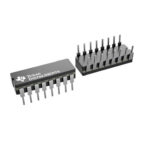 CD54HCT175F3A
The activity of extra discounts on wholesale prices is in full swing…
Please fill in your contact information and we will send you the latest wholesale price list.






