 ChipApex | Global Electronic Components Supplier

SEARCH
Search Product
Search Post
— IC芯片 | 连接器 | 传感器 | 被动器件 —
Search productSearch post
— IC芯片 | 连接器 | 传感器 | 被动器件 —
Consult the customer manager about the wholesale price.
consultation hotline:86-132-6715-2157
email:[email protected]
Contact the product manager for consultation. One-stop consultation is available.
Do you want a lower wholesale price? Please send us your inquiry and we will reply immediately.
The CD74HC273E is a high-speed CMOS logic octal D-type flip-flop manufactured by Texas Instruments. It features eight independent D-type flip-flops with positive-edge triggering and an asynchronous master reset. The device operates within a supply voltage range of 2 V to 6 V and supports data rates up to 20 MHz. It is housed in a 20-pin PDIP package, designed for through-hole mounting. The component functions as a non-inverting output buffer with a propagation delay of 150 ns at 50 pF load capacitance. It complies with RoHS standards and is lead-free.
Verify the specific suffix 'E' corresponds to the PDIP-20 through-hole package variant when sourcing. Confirm that the order includes the standard tape-and-reel or tube packaging options available for this series. Ensure compliance with RoHS directives and lead-free manufacturing requirements specified by Texas Instruments. Cross-reference the manufacturer part number against official distributor catalogs to avoid confusion with surface-mount variants like the M-series.
Select the CD74HC273E when through-hole mounting is required for prototyping or industrial environments. Choose this model over surface-mount alternatives if mechanical stability during assembly is a priority. Consider the 2V to 6V operating range for compatibility with various logic families. Verify that the 150 ns propagation delay meets the timing constraints of the target application circuit.
This component belongs to the Texas Instruments HC logic family, which utilizes high-speed CMOS technology. The HC series is designed for compatibility with standard TTL inputs while offering lower power consumption. The CD74HC273E specifically addresses the need for multi-bit storage in digital designs. It serves as a fundamental building block for sequential logic circuits requiring parallel data retention.
CD74HC273ME4
The device uses positive-edge triggering, meaning data is latched on the rising edge of the clock signal.
The datasheet specifies an asynchronous master reset function. Standard HC logic typically employs an active-low reset, but verification of the specific schematic symbol in the official datasheet is recommended for polarity confirmation.
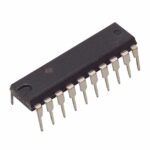 CD74HC273E

The activity of extra discounts on wholesale prices is in full swing…
Please fill in your contact information and we will send you the latest wholesale price list.






