ChipApex | Global Electronic Components Supplier
SEARCH
Search Product
Search Post
— IC芯片 | 连接器 | 传感器 | 被动器件 —
Search productSearch post
— IC芯片 | 连接器 | 传感器 | 被动器件 —
Consult the customer manager about the wholesale price.
consultation hotline:86-132-6715-2157
email:[email protected]
Contact the product manager for consultation. One-stop consultation is available.
Do you want a lower wholesale price? Please send us your inquiry and we will reply immediately.
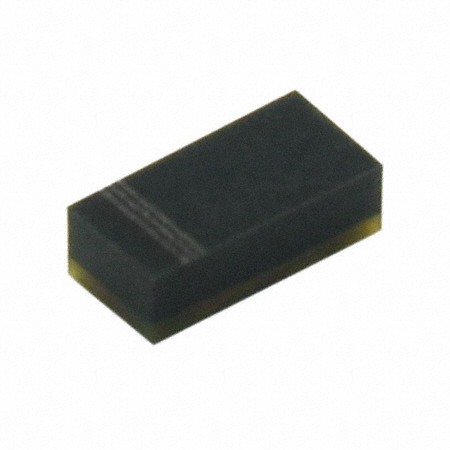
The CDBFR0140R is a surface-mount Schottky barrier diode manufactured by Comchip Technology. It features a repetitive peak reverse voltage of 40V and an average forward rectified current rating of 100mA. The device utilizes a SOD-323F (1005 metric) package, designed for small surface mounting applications. Key electrical characteristics include low reverse leakage current and majority carrier conduction, ensuring high efficiency and ultra-high-speed switching capabilities suitable for low-voltage power supply circuits.
Verify the specific suffix (e.g., -HF) to confirm halogen-free status and RoHS compliance as per manufacturer documentation. Confirm the package type matches the design requirement, as variations such as SOD-323F are standard for this series. Cross-reference datasheet revision dates to ensure parameter accuracy. Ensure storage conditions align with semiconductor handling standards to prevent moisture sensitivity issues prior to soldering.
Select this component when a compact surface-mount solution is required for low-current rectification. The 100mA rating suits small signal applications rather than high-power loads. Consider the SOD-323F footprint for board space optimization. Verify thermal dissipation requirements, as the small package limits power handling compared to larger through-hole alternatives. Ensure the 40V reverse voltage rating exceeds the maximum circuit operating voltage with adequate margin.
This part belongs to Comchip Technology's CDBFR series of Schottky barrier rectifiers. These devices are engineered for general-purpose rectification in portable and battery-operated equipment. The series emphasizes low profile and high reliability, utilizing silicon epitaxial planar chip technology. The CDBFR0140R specifically targets applications requiring fast recovery and minimal forward voltage drop in constrained spaces.
Check for direct substitutes within the same voltage and current ratings from other manufacturers. Ensure pinout compatibility if replacing in existing designs. Verify that alternative packages meet the same mechanical constraints. Confirm that thermal performance and reverse leakage specifications are equivalent or superior to maintain circuit integrity.
 CDBFR0140R
The activity of extra discounts on wholesale prices is in full swing…
Please fill in your contact information and we will send you the latest wholesale price list.