ChipApex | Global Electronic Components Supplier
SEARCH
Search Product
Search Post
— IC芯片 | 连接器 | 传感器 | 被动器件 —
Search productSearch post
— IC芯片 | 连接器 | 传感器 | 被动器件 —
Consult the customer manager about the wholesale price.
consultation hotline:86-132-6715-2157
email:[email protected]
Contact the product manager for consultation. One-stop consultation is available.
Do you want a lower wholesale price? Please send us your inquiry and we will reply immediately.
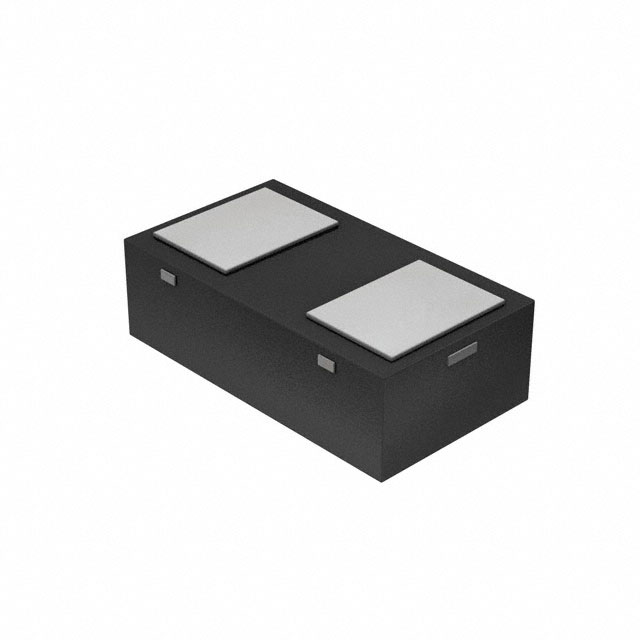
The CDBQC0130L-HF is a silicon Schottky barrier diode manufactured by Comchip Technology, designed for surface-mount applications. It features a single configuration within an SOD-923F-2 package. Key electrical parameters include a maximum repetitive reverse voltage (Vrrm) of 30 V and an average forward rectified current (If) of 100 mA. The device exhibits a low forward voltage (Vf) of 250 mV at rated current and a maximum reverse leakage current (Ir) of 10 µA. It supports a forward surge current (Ifsm) of 3 A and operates within a junction temperature range of -40°C to +125°C.
Verify the specific suffix 'L' against the manufacturer's latest datasheet to confirm package dimensions and marking codes, as variations may exist between production runs. Ensure compliance with RoHS directives if required by the end application. Cross-reference the Mouser part number 750-CDBQC0130L-HF or Comchip catalog data for exact ordering specifications and packaging options such as cut tape or reel quantities.
Select this component when a compact surface-mount Schottky diode with low forward voltage drop is required for 30 V reverse voltage applications. The SOD-923F-2 package is suitable for space-constrained designs. Compare the 100 mA current rating against circuit load requirements. Consider the 250 mV forward voltage specification for thermal management in low-voltage systems. Verify that the 10 µA reverse leakage current meets system standby power constraints.
The CDBQC0130L-HF belongs to Comchip Technology's CDBQC series of low-profile Schottky barrier rectifiers. This series utilizes silicon technology to provide fast switching capabilities and high reliability. The product line is engineered for modern electronics requiring miniaturized components with robust electrical performance in small form factors like the SOD-923F package.
Comchip Technology lists CDBQR0130L-HF as a recommended manufacturer substitute. Both parts share similar electrical ratings but may differ in specific package tolerances or marking codes. Verify pinout compatibility and physical dimensions before substitution.
 CDBQC0130L-HF
The activity of extra discounts on wholesale prices is in full swing…
Please fill in your contact information and we will send you the latest wholesale price list.