 ChipApex | Global Electronic Components Supplier

SEARCH
Search Product
Search Post
— IC芯片 | 连接器 | 传感器 | 被动器件 —
Search productSearch post
— IC芯片 | 连接器 | 传感器 | 被动器件 —
Consult the customer manager about the wholesale price.
consultation hotline:86-132-6715-2157
email:[email protected]
Contact the product manager for consultation. One-stop consultation is available.
Do you want a lower wholesale price? Please send us your inquiry and we will reply immediately.
The CDCDB2000NPPT is a low-power, high-performance clock buffer from Texas Instruments designed for PCI Express (PCIe) Gen 1 through Gen 5 applications. It provides twenty Low-Power HCSL (LP-HCSL) outputs with a maximum frequency of 250 MHz and supports Spread Spectrum Clocking (SSC) to reduce electromagnetic interference. The device operates on a single supply voltage ranging from 3.135 V to 3.465 V and functions within an ambient temperature range of -40°C to +85°C. Packaged in an exposed pad 80-TLGA (6x6 mm) surface-mount case, it serves as a fanout buffer for multi-lane PCIe clock distribution.
Verify the package designation matches the 80-TLGA (6x6 mm) form factor with an exposed pad for thermal management. Confirm the suffix NPPT indicates the Tape & Reel packaging configuration. Ensure the component grade meets industrial temperature requirements (-40°C to +85°C) if deployed in harsh environments. Cross-reference the manufacturer part number against official Texas Instruments documentation to validate authenticity and revision status before procurement.
Select this component when designing systems requiring twenty differential clock outputs for PCIe Gen 1 through Gen 5 architectures. The LP-HCSL output standard ensures compatibility with modern high-speed serial interfaces while minimizing power dissipation. Verify that the PCB layout accommodates the 80-pin thermal land grid array footprint. Consider the 250 MHz frequency limit when determining suitability for specific PCIe generation speeds and lane counts.
This device belongs to the CDCDB2000 series of clock buffers manufactured by Texas Instruments. It is specifically engineered to address the timing and power constraints of multi-lane peripheral component interconnect express (PCIe) topologies. The component integrates necessary buffering and distribution capabilities into a compact surface-mount package suitable for high-density motherboard designs.
Publicly confirmed substitute part numbers are not available in the provided source material. Consult Texas Instruments application notes or distributor cross-reference tools for verified alternatives based on pin compatibility and electrical specifications.
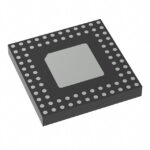 CDCDB2000NPPT

The activity of extra discounts on wholesale prices is in full swing…
Please fill in your contact information and we will send you the latest wholesale price list.






