 ChipApex | Global Electronic Components Supplier

SEARCH
Search Product
Search Post
— IC芯片 | 连接器 | 传感器 | 被动器件 —
Search productSearch post
— IC芯片 | 连接器 | 传感器 | 被动器件 —
Consult the customer manager about the wholesale price.
consultation hotline:86-132-6715-2157
email:[email protected]
Contact the product manager for consultation. One-stop consultation is available.
Do you want a lower wholesale price? Please send us your inquiry and we will reply immediately.
The CDCLVP2102RGTR is a high-performance clock buffer manufactured by Texas Instruments, designed for demanding communication applications. It features two differential inputs compatible with LVPECL, LVDS, LVCMOS, and LVTTL signals, distributing them to four LVPECL outputs in a 2:4 configuration. The device supports maximum clock frequencies up to 2 GHz with a maximum propagation delay of 450 ps. It operates on a supply voltage range of 2.375 V to 3.6 V and exhibits very low additive jitter of less than 100 fs RMS within the 10 kHz to 20 MHz offset range. Packaged in a 16-pin VQFN (3x3 mm) tape and reel format, it functions within an industrial temperature range of –40°C to +85°C.
Verify the specific ordering suffix RGTR corresponds to the Tape & Reel packaging configuration as indicated in the product description. Confirm that the 16-VQFN (3x3 mm) package dimensions match the design requirements. Ensure the operating temperature range of –40°C to +85°C aligns with the environmental conditions of the target application. Cross-reference the electrical specifications against the official datasheet to validate the 2.375 V to 3.6 V supply voltage limits.
Select this component when low additive jitter and high-speed distribution are critical for LVPECL output stages. The universal input capability allows flexibility in interfacing with various source technologies including LVDS and LVCMOS. Consider the 16-pin VQFN package for space-constrained surface-mount designs. Verify that the 450 ps maximum propagation delay meets the timing constraints of the system. Ensure the power supply can maintain stability within the 2.375 V to 3.6 V range to guarantee optimal performance.
The CDCLVP2102 belongs to the family of high-performance clock buffers from Texas Instruments, specifically engineered for clock distribution networks. The RGTR suffix denotes the tape and reel packaging variant, distinct from tube or tray configurations. This part is part of the broader CDCLV series, which includes various buffer and driver solutions for different interface standards and pin counts.
Check for direct cross-references within the Texas Instruments CDCLV family. Evaluate alternative buffers with similar 2:4 ratios and LVPECL outputs if pinout compatibility is required. Verify that substitute components meet the same 2 GHz frequency and <100 fs jitter specifications.
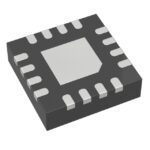 CDCLVP2102RGTR

The activity of extra discounts on wholesale prices is in full swing…
Please fill in your contact information and we will send you the latest wholesale price list.






