 ChipApex | Global Electronic Components Supplier
SEARCH
Search Product
Search Post
— IC芯片 | 连接器 | 传感器 | 被动器件 —
Search productSearch post
— IC芯片 | 连接器 | 传感器 | 被动器件 —
Consult the customer manager about the wholesale price.
consultation hotline:86-132-6715-2157
email:[email protected]
Contact the product manager for consultation. One-stop consultation is available.
Do you want a lower wholesale price? Please send us your inquiry and we will reply immediately.
The CLC021AVGZ-5.0/NOPB is a high-speed serializer manufactured by Texas Instruments, originally developed under the National Semiconductor brand. This device converts ten parallel low-voltage differential signaling (LVDS) inputs into a single serial LVDS output stream. It supports data rates up to 400Mbps and operates on a single 5V supply voltage ranging from 4.5V to 5.5V. The component is housed in a 44-pin plastic quad flat package (PQFP) measuring 10x10 mm. Designed for automotive applications, it meets AEC-Q100 qualification standards and functions within an operating temperature range of 0°C to 70°C.
This specific part number is officially classified as obsolete and is no longer in active manufacturing by Texas Instruments. Sourcing requires verification through authorized distributors or specialized components providers like Rochester Electronics. Buyers must confirm the authenticity and condition of available stock, as availability is limited to existing inventory rather than new production runs.
Engineers selecting this component should verify compatibility with their system's clocking requirements, as the serializer relies on external clock signals for data alignment. The design must accommodate the 44-PQFP footprint and ensure adequate thermal management within the specified 0°C to 70°C operating range. Since the device is obsolete, alternative solutions with similar pinouts and performance characteristics should be evaluated for long-term supply chain stability.
The CLC021 series represents a family of high-performance serializers designed for mixed-signal video applications. Originally introduced by National Semiconductor, the product line was transferred to Texas Instruments following industry consolidation. The CLC021 variant specifically targets automotive and industrial markets requiring reliable, high-bandwidth data serialization in a compact surface-mount package.
Parametric equivalents such as the CLC021AVGZ-5.0 are available through Rochester Electronics. Designers should evaluate these substitutes for functional compatibility, ensuring that pin configurations and electrical specifications match the original design requirements before implementation.
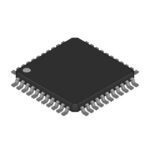 CLC021AVGZ-5.0
The activity of extra discounts on wholesale prices is in full swing…
Please fill in your contact information and we will send you the latest wholesale price list.





