 ChipApex | Global Electronic Components Supplier
SEARCH
Search Product
Search Post
— IC芯片 | 连接器 | 传感器 | 被动器件 —
Search productSearch post
— IC芯片 | 连接器 | 传感器 | 被动器件 —
Consult the customer manager about the wholesale price.
consultation hotline:86-132-6715-2157
email:[email protected]
Contact the product manager for consultation. One-stop consultation is available.
Do you want a lower wholesale price? Please send us your inquiry and we will reply immediately.
The COP8CCR9IMT8/NOPB is an 8-bit CMOS Flash microcontroller from the COP8 family, featuring 32 kbytes of Flash program memory and 1 kbyte of volatile RAM. It integrates a 10-bit Analog-to-Digital Converter with up to 16 channels, two USARTs, and three timers. The device supports dual clock operation with a clock doubler for speeds up to 20 MHz. It includes Virtual EEPROM functionality via Flash memory and offers in-system programmability through MICROWIRE/PLUS. Operating voltage ranges from 4.5V to 5.5V at temperatures up to +125°C, or 2.7V to 5.5V up to +85°C.
Verify the specific suffix against the official Texas Instruments datasheet SNOS535I to confirm package type and temperature range. Ensure compatibility with existing development tools as the COP8 architecture requires specific hardware and software support for programming and emulation. Check for end-of-life status or alternative recommendations from the manufacturer before finalizing procurement plans.
Select this component when high integration of analog and digital peripherals is required within an 8-bit architecture. The COP8CCR9 variant is suitable for applications demanding operation at higher voltages (4.5V–5.5V) and extended temperatures (+125°C). Consider the available I/O count and timer resources relative to system complexity. Evaluate the need for Virtual EEPROM if persistent data storage without external chips is necessary.
This part belongs to the COP8CBR9/COP8CCR9/COP8CDR9 family of 8-bit CMOS Flash microcontrollers. These devices share a common core architecture but differ in Brownout Reset configurations and operating voltage ranges. The COP8CCR9 specifically includes a Brownout Reset feature with a trip level between 4.17V and 4.5V, distinguishing it from the CDR9 which lacks this feature.
Public confirmed substitute part numbers are not provided in the source material. Consult Texas Instruments documentation for potential obsolescence notices or recommended upgrades within the COP8 family or newer architectures.
The device supports operation up to 20 MHz when using a 10 MHz oscillator with the clock doubler enabled.
Virtual EEPROM emulates variable amounts of EEPROM by initializing nonvolatile variables from Flash Memory and periodically restoring them to Flash Memory using boot ROM routines.
Yes, it supports true in-system programming and real-time emulation via the MICROWIRE/PLUS serial interface or custom user-defined routines.
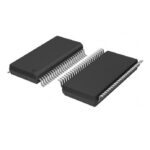 COP8CCR9IMT8/NOPB
The activity of extra discounts on wholesale prices is in full swing…
Please fill in your contact information and we will send you the latest wholesale price list.







