 ChipApex | Global Electronic Components Supplier
SEARCH
Search Product
Search Post
— IC芯片 | 连接器 | 传感器 | 被动器件 —
Search productSearch post
— IC芯片 | 连接器 | 传感器 | 被动器件 —
Consult the customer manager about the wholesale price.
consultation hotline:86-132-6715-2157
email:[email protected]
Contact the product manager for consultation. One-stop consultation is available.
Do you want a lower wholesale price? Please send us your inquiry and we will reply immediately.
The COP8SAC728M9 is an 8-bit CMOS microcontroller from the COP8SA family, featuring 4k bytes of OTP EPROM and 128 bytes of RAM. It utilizes a modified Harvard architecture with a 1 µs instruction cycle time at 10 MHz CKI. The device supports single-supply operation between 2.7V and 5.5V and includes a multi-function 16-bit timer/counter with PWM output, MICROWIRE/PLUS serial I/O, and Multi-Input Wakeup logic. It is housed in a 28-pin SOIC package and operates within a temperature range of 0°C to +70°C.
Verify the specific ordering suffix M9 corresponds to the 0°C to +70°C commercial temperature grade and 28-pin SOIC package. Confirm that the OTP EPROM variant meets the required security and read/write protection specifications for the target application. Ensure compatibility with existing development tools for COP8SA family devices.
Select this component when a cost-effective 8-bit solution with OTP flexibility and low EMI is required. Consider the 28-pin package constraints against available I/O needs. Evaluate the internal R/C oscillator accuracy if precise timing is critical without external crystals. Compare against ROM-based variants if reprogramming is not necessary.
This part belongs to the COP8SA family, which serves as a pin-compatible superset to the older COP800 family. It replaces legacy designs while offering enhanced features like reduced EMI and smaller packaging options. The family integrates advanced peripherals such as the MICROWIRE/PLUS interface and high-current outputs suitable for direct drive applications.
COP8SAC728N9 (Windowed EPROM version)
The device supports a maximum clock frequency of 10 MHz, resulting in a 1 µs instruction cycle time under specified voltage conditions.
No, the COP8SA family uses a software stack scheme located in RAM, allowing for flexible subroutine calls limited only by available memory rather than a fixed hardware stack depth.
It incorporates patented EMI reduction technology, including low EMI clock circuitry, gradual turn-on output drivers, and internal ICC smoothing filters to reduce radiated emissions.
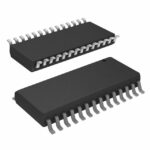 COP8SAC728M9
The activity of extra discounts on wholesale prices is in full swing…
Please fill in your contact information and we will send you the latest wholesale price list.





