 ChipApex | Global Electronic Components Supplier
CQDD-16M TR13
Search Product
Search Post
— IC芯片 | 连接器 | 传感器 | 被动器件 —
Search productSearch post
— IC芯片 | 连接器 | 传感器 | 被动器件 —
Consult the customer manager about the wholesale price.
consultation hotline:86-132-6715-2157
email:[email protected]
Contact the product manager for consultation. One-stop consultation is available.
Do you want a lower wholesale price? Please send us your inquiry and we will reply immediately.
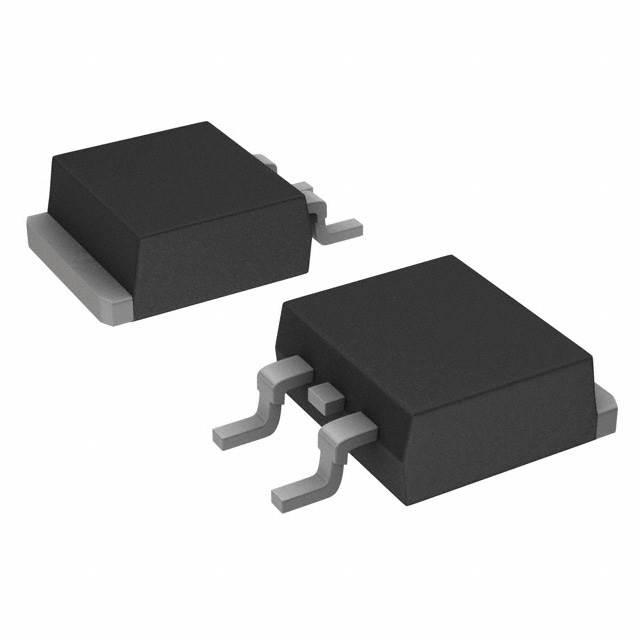
The CQDD-16M TR13 is a surface-mount silicon triac from Central Semiconductor Corp, housed in a D2PAK package. It supports full-wave AC control with gate triggering across all four quadrants. The device features a peak repetitive off-state voltage of 600 V and an RMS on-state current rating of 16 A at 90°C case temperature. Key electrical parameters include a peak one-cycle surge current of 110 A, a critical rate of rise of on-state current (di/dt) of 10 A/μs, and a maximum junction operating temperature range of -40 to +125 °C.
This component has been officially classified as End of Life by the manufacturer. No direct replacement part numbers are currently available within the product line. Procurement is restricted to existing stock only, with no new production scheduled. Buyers should verify remaining inventory levels directly with authorized distributors or the manufacturer's support team before finalizing acquisition plans.
Designers must account for the discontinued status when selecting this component. Since no functional equivalents are listed by the manufacturer, alternative sourcing strategies are required. Engineers should evaluate the specific thermal and electrical constraints of the D2PAK package against system requirements, ensuring that any substitute components meet the original 600V blocking voltage and 16A current handling specifications.
The CQDD-16M belongs to a series of high-current silicon triacs designed for industrial power applications. It shares mechanical dimensions with the CQDD-16N but differs in voltage ratings. Both variants utilize the same D2PAK footprint, facilitating board layout consistency across different voltage requirements within the same product family.
No official replacement part numbers are documented for this model. The manufacturer explicitly states that no replacements are available and advises contacting engineering for alternate source assistance. Designers must seek third-party equivalents independently.
The peak repetitive off-state voltage (V_DRM) is rated at 600 V.
Yes, the device is designed for gate triggering in all four quadrants.
The operating junction temperature range extends up to +125 °C.
 CQDD-16M TR13
The activity of extra discounts on wholesale prices is in full swing…
Please fill in your contact information and we will send you the latest wholesale price list.