 ChipApex | Global Electronic Components Supplier
SEARCH
Search Product
Search Post
— IC芯片 | 连接器 | 传感器 | 被动器件 —
Search productSearch post
— IC芯片 | 连接器 | 传感器 | 被动器件 —
Consult the customer manager about the wholesale price.
consultation hotline:86-132-6715-2157
email:[email protected]
Contact the product manager for consultation. One-stop consultation is available.
Do you want a lower wholesale price? Please send us your inquiry and we will reply immediately.
The Harris Corporation CS82C52 is a CMOS Serial I/O Controller designed for high-speed asynchronous communication. It features a single channel capable of data transmission rates up to 0.125 MBps, utilizing NRZ encoding and decoding methods. The device operates with a maximum clock frequency of 16 MHz and supports bus compatibility with the 80C86 and 80C88 processors. Packaged in a PDIP-28 format, it functions within a temperature range of -40 °C to +85 °C. The controller integrates an on-chip data RAM width suitable for buffer management and includes DMA channel support for efficient data transfer operations.
Verify the specific suffix designation to confirm package type and temperature grade, as variations exist between ceramic DIP and plastic packages. Confirm RoHS compliance status separately, as original Harris manufacturing records may indicate non-compliance with modern environmental directives. Ensure supply chain sources provide valid traceability documentation for critical applications.
Select this component when interfacing 8-bit microprocessors with serial peripherals requiring DMA support. Compare against the CP82C52 variant if commercial temperature ranges suffice. Verify pinout compatibility with existing PCB layouts before substitution. Consider the MD82C52 series for alternative packaging options such as PLCC or CDIP if surface mount or hermetic sealing is required.
The CS82C52 belongs to the 82C52 family of Universal Asynchronous Receiver/Transmitters (UARTs) originally developed by Harris Semiconductor. This family was widely adopted in embedded systems for managing serial data streams. The component serves as a bridge between parallel microprocessor buses and serial communication lines, facilitating reliable data exchange in industrial and computing environments.
Publicly confirmed substitute part numbers include the ID82C52 and MD82C52 variants from Renesas/Intersil. These alternatives maintain functional compatibility but may differ in package style or operating temperature specifications. Verify electrical parameters against the original datasheet before implementation.
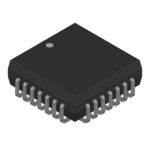 CS82C52
The activity of extra discounts on wholesale prices is in full swing…
Please fill in your contact information and we will send you the latest wholesale price list.





