 ChipApex | Global Electronic Components Supplier
SEARCH
Search Product
Search Post
— IC芯片 | 连接器 | 传感器 | 被动器件 —
Search productSearch post
— IC芯片 | 连接器 | 传感器 | 被动器件 —
Consult the customer manager about the wholesale price.
consultation hotline:86-132-6715-2157
email:[email protected]
Contact the product manager for consultation. One-stop consultation is available.
Do you want a lower wholesale price? Please send us your inquiry and we will reply immediately.
The CY2-143+ is an ultra-wideband MMIC frequency multiplier designed for signal conditioning applications. It operates as a doubler, converting input frequencies from 2000 to 7000 MHz into output frequencies ranging from 4000 to 14000 MHz. The component utilizes GaAs HBT technology and features a typical conversion loss of 12 dB. It provides high fundamental and harmonic suppression, with F1 at 30 dBc, F3 at 32 dBc, and F4 at 17 dBc. The device is housed in a compact 4 x 4 x 1 mm MCLP-24 surface-mount package and supports operation within a temperature range of -40°C to +85°C.
Verify the specific ordering suffix to ensure the correct package variant, such as distinguishing between the standard SMT module and die options. Confirm that the required operating temperature range aligns with the specified -40°C to +85°C limits. Ensure the design accommodates the 50 Ohm impedance matching requirements. Check for RoHS compliance status if environmental regulations apply to the final assembly. Validate the MCLP-24 footprint compatibility during PCB layout.
Select this component when a wide bandwidth is required for frequency multiplication without significant signal degradation. The low conversion loss makes it suitable for applications where minimizing additional amplification stages is beneficial. Consider the compact physical dimensions for integration into dense circuit boards. Ensure the input source can provide sufficient power within the 2 to 7 GHz range for optimal performance.
This part belongs to the CY2 series of signal conditioning components manufactured by Mini-Circuits. It is categorized under multipliers and filters within the broader RF and microwave component portfolio. The device represents a solution for broadband frequency conversion using advanced semiconductor technology.
The CY2-143-D+ is a documented die version of this component offering similar electrical characteristics but in a different physical format. Verify mechanical integration requirements before substituting between the packaged module and the die variant.
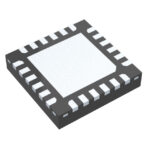 CY2-143+
The activity of extra discounts on wholesale prices is in full swing…
Please fill in your contact information and we will send you the latest wholesale price list.





