 ChipApex | Global Electronic Components Supplier

SEARCH
Search Product
Search Post
— IC芯片 | 连接器 | 传感器 | 被动器件 —
Search productSearch post
— IC芯片 | 连接器 | 传感器 | 被动器件 —
Consult the customer manager about the wholesale price.
consultation hotline:86-132-6715-2157
email:[email protected]
Contact the product manager for consultation. One-stop consultation is available.
Do you want a lower wholesale price? Please send us your inquiry and we will reply immediately.
The CY74FCT2374CTSOCE4 is an octal D-type flip-flop manufactured by Texas Instruments, belonging to the FCT logic series. It features positive edge triggering and true outputs with three-state capability. The device operates on a single power supply ranging from 4.75V to 5.25V. It is housed in a 20-SOIC package suitable for surface mount installation. The component supports a wide operating temperature range from -40°C to 85°C. It includes an output enable input for controlling data flow. The static current consumption is specified at 100 µA. Propagation delay is typically 10 ns under standard load conditions.
Verify the specific suffix E4 indicates lead-free compliance and RoHS standards before procurement. Confirm the SOIC-20 package dimensions match the target PCB footprint. Ensure the supply voltage matches the 4.75V to 5.25V requirement. Check for any obsolescence notices or lifecycle status changes from the manufacturer. Validate that the enable pin logic level aligns with the system control signals.
Select this component when an octal register with tri-state outputs is required for high-speed CMOS applications. The FCT series offers faster switching speeds compared to standard LS logic while maintaining compatible pinouts. Consider the 20-SOIC package for space-constrained surface mount designs. Evaluate the 100 µA static current against power budget constraints. Ensure the operating temperature range meets the environmental requirements of the final assembly.
This part belongs to the CY74FCT2374T family of octal flip-flops. The base model CY74FCT2374T provides the core logical functionality. The CTSOCE4 designation specifies the commercial temperature grade, SOIC-20 package, tape and reel packaging option, and lead-free manufacturing process. This variant ensures compatibility with automated pick-and-place assembly processes.
The OE (Output Enable) pin controls the state of the outputs. When low, the outputs are active; when high, they enter a high-impedance state.
The outputs are true, meaning they are non-inverted relative to the D inputs.
Data is captured on the positive-going transition of the clock signal.
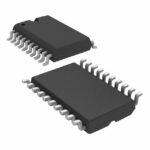 CY74FCT2374CTSOCE4

The activity of extra discounts on wholesale prices is in full swing…
Please fill in your contact information and we will send you the latest wholesale price list.






