 ChipApex | Global Electronic Components Supplier
SEARCH
Search Product
Search Post
— IC芯片 | 连接器 | 传感器 | 被动器件 —
Search productSearch post
— IC芯片 | 连接器 | 传感器 | 被动器件 —
Consult the customer manager about the wholesale price.
consultation hotline:86-132-6715-2157
email:[email protected]
Contact the product manager for consultation. One-stop consultation is available.
Do you want a lower wholesale price? Please send us your inquiry and we will reply immediately.
The DIO3350BEN20 is a two-pair, 2:1 data switch designed for USB SuperSpeed Gen1 and Gen2 applications, supporting 5 Gbps and 10 Gbps data rates. It operates with a supply voltage range of 1.5 V to 5.0 V and delivers an 11 GHz bandwidth. Key electrical characteristics include a typical insertion loss of -0.9 dB at 2.5 GHz, low active power consumption of 21 µA at 5 V, and shutdown current under 0.5 µA. The device provides ±4 kV HBM ESD protection and functions within a temperature range of -40°C to 85°C. It is packaged in a QFN2.5*4.5-20 form factor.
Verify the specific ordering part number against official Dioo Microcircuits documentation to ensure correct package type and tape & reel quantity. Confirm RoHS compliance status and moisture sensitivity level requirements prior to procurement. Cross-reference pin assignments and top markings to prevent integration errors during assembly.
Select this component for designs requiring bidirectional switching of SuperSpeed signals in mobile devices. Ensure the system supports the required control logic levels for the S and /OE pins. Verify that the PCB layout accommodates the QFN2.5*4.5-20 footprint and thermal requirements for the specified operating temperature range.
This model belongs to the DIO3350 series of high-speed data switches manufactured by Dioo Microcircuits Co., Ltd. The series includes variants such as DIO3350LN16, DIO3350CN18, and DIO3350AEN20, which differ primarily in package dimensions and pin counts while maintaining similar functional specifications for high-speed signal routing.
Direct substitutes are not explicitly listed in the provided datasheet. Evaluate other 2:1 USB SuperSpeed switches from manufacturers like Texas Instruments or Analog Devices, ensuring compatibility with the 1.5 V to 5.0 V supply range and QFN2.5*4.5-20 package constraints.
The device offers a differential -3 dB bandwidth of 11 GHz, supporting data rates up to 11 Gbps.
It provides ±4 kV Human Body Model (HBM) electrostatic discharge protection on its I/O ports.
The typical insertion loss is -0.9 dB at a frequency of 2.5 GHz.
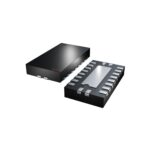 DIO3350BEN20
The activity of extra discounts on wholesale prices is in full swing…
Please fill in your contact information and we will send you the latest wholesale price list.





