 ChipApex | Global Electronic Components Supplier
SEARCH
Search Product
Search Post
— IC芯片 | 连接器 | 传感器 | 被动器件 —
Search productSearch post
— IC芯片 | 连接器 | 传感器 | 被动器件 —
Consult the customer manager about the wholesale price.
consultation hotline:86-132-6715-2157
email:[email protected]
Contact the product manager for consultation. One-stop consultation is available.
Do you want a lower wholesale price? Please send us your inquiry and we will reply immediately.
The DS1005-250 is a programmable delay line integrated circuit manufactured by Analog Devices Inc. under the Maxim Integrated brand, belonging to the DS1005 series. It provides precise signal timing adjustments with a total delay range of 250 nanoseconds. The device features five distinct taps, allowing for granular control over signal propagation time. Designed for surface-mount applications, it operates within a standard voltage supply range and is housed in an 8-SOIC package. This component serves as a dedicated timing element for clock distribution and synchronization tasks.
Verify component authenticity through authorized distributors or direct manufacturer channels due to potential availability constraints. Confirm package integrity and pin alignment against the 8-SOIC specification before installation. Check for obsolescence status as this part may be discontinued or subject to limited production runs. Ensure environmental compliance documentation matches project requirements.
Select this component when fixed or programmable delay lines are required for single-channel timing applications. Compare tap resolution and total delay range against system jitter tolerance requirements. Evaluate thermal performance within the specified operating temperature range. Consider alternative packages if board space constraints differ from the 8-SOIC footprint dimensions.
This device belongs to the DS1005 family of delay lines, which offers various total delay options. It shares functional similarities with other Maxim Integrated timing components but is distinguished by its specific 250ns maximum delay capability. The series is designed for general-purpose timing applications requiring reliable and accurate signal delays without complex external configuration networks.
Publicly confirmed substitute part numbers are not available in the provided source material. Consult official manufacturer cross-reference guides for compatible alternatives. Verify electrical parameters and pin compatibility before substituting with similar delay line ICs.


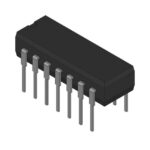 DS1005-250
The activity of extra discounts on wholesale prices is in full swing…
Please fill in your contact information and we will send you the latest wholesale price list.



