 ChipApex | Global Electronic Components Supplier
SEARCH
Search Product
Search Post
— IC芯片 | 连接器 | 传感器 | 被动器件 —
Search productSearch post
— IC芯片 | 连接器 | 传感器 | 被动器件 —
Consult the customer manager about the wholesale price.
consultation hotline:86-132-6715-2157
email:[email protected]
Contact the product manager for consultation. One-stop consultation is available.
Do you want a lower wholesale price? Please send us your inquiry and we will reply immediately.
The DS1210N+ is a nonvolatile controller chip designed to convert standard CMOS RAM into nonvolatile memory. It operates within a supply voltage range of 4.75V to 5.5V and supports an industrial temperature range from -40°C to +85°C. The device consumes less than 100nA in battery mode and features automatic power-fail detection with write protection. It includes battery status monitoring, redundant battery support, and low forward voltage drop switching.
Verify the specific suffix 'N' confirms the industrial temperature grade (-40°C to +85°C) rather than commercial grade. Confirm RoHS compliance status via official documentation as manufacturing practices may evolve. Check current lifecycle status as older Maxim products often face discontinuation or obsolescence notices.
Select this component when integrating external SRAM requires nonvolatile behavior without complex software overhead. Ensure the application benefits from hardware-level write protection and automatic battery switchover. Consider package availability if space constraints favor the 8-pin PDIP form factor over other options.
This part belongs to the DS1210 family of nonvolatile controllers from Analog Devices/Maxim Integrated. It complements other RTC and memory solutions by providing the necessary interface logic for battery-backed RAM. The N suffix specifically denotes the extended temperature variant suitable for harsher environments compared to standard commercial parts.
DS1210S+ (SOIC-16 package)
It monitors the incoming supply voltage and inhibits the Chip Enable output (CEO) when voltage drops out-of-tolerance, effectively preventing writes while simultaneously switching to battery power.
The TOL pin allows adjustment of the power-fail detection threshold. Grounding it sets the trip point between 4.5V and 4.75V, while connecting it to VCCO lowers the range to 4.25V–4.5V.
Yes, it provides for redundant batteries by allowing connections to both VBAT1 and VBAT2 pins, automatically selecting the battery with the higher voltage.
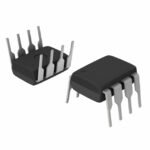 DS1210N+
The activity of extra discounts on wholesale prices is in full swing…
Please fill in your contact information and we will send you the latest wholesale price list.





