 ChipApex | Global Electronic Components Supplier
SEARCH
Search Product
Search Post
— IC芯片 | 连接器 | 传感器 | 被动器件 —
Search productSearch post
— IC芯片 | 连接器 | 传感器 | 被动器件 —
Consult the customer manager about the wholesale price.
consultation hotline:86-132-6715-2157
email:[email protected]
Contact the product manager for consultation. One-stop consultation is available.
Do you want a lower wholesale price? Please send us your inquiry and we will reply immediately.
The DS32ELX0421SQ/NOPB is a serializer manufactured by Texas Instruments, originally developed under the National Semiconductor brand. It functions as an FPGA Link Serializer designed for high-speed data transmission. The device supports data rates ranging from 125 MHz to 312.5 MHz. It accepts five LVDS parallel inputs and converts them into two CML serial outputs. The component operates on supply voltages of 2.5 V or 3.3 V. It is rated for an operating temperature range from -40°C to +85°C. The unit is housed in a 48-pin LLP EP package suitable for surface mount technology.
Verify the manufacturer designation carefully, as National Semiconductor assets are now managed by Texas Instruments. Confirm the specific suffix 'NOPB' indicates lead-free compliance and RoHS adherence. Ensure the package type matches the required footprint for PCB layout. Check for any recent product lifecycle notices regarding obsolescence or replacement recommendations from the current manufacturer.
Select this component when interfacing FPGAs that require low-jitter serialization of parallel data. Compare input/output channel counts against system requirements to ensure compatibility. Evaluate power supply constraints to confirm support for 2.5 V or 3.3 V operation. Consider thermal management capabilities given the specified operating temperature range and package thermal characteristics.
This part belongs to the DS32ELX series of serializers. It complements deserializer counterparts in complete SerDes solutions. The series is designed for applications demanding reliable high-speed data transfer between logic devices. Texas Instruments continues to support these components following the acquisition of National Semiconductor's interface product line.
Check for direct pin-to-pin replacements within the DS32ELX family. Verify functional equivalence with newer generations of FPGA link serializers. Consult official substitution guides for any recommended upgrades offering improved jitter performance or lower power consumption.
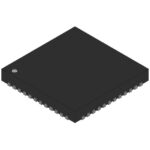 DS32ELX0421SQ/NOPB
The activity of extra discounts on wholesale prices is in full swing…
Please fill in your contact information and we will send you the latest wholesale price list.





