 ChipApex | Global Electronic Components Supplier
SEARCH
Search Product
Search Post
— IC芯片 | 连接器 | 传感器 | 被动器件 —
Search productSearch post
— IC芯片 | 连接器 | 传感器 | 被动器件 —
Consult the customer manager about the wholesale price.
consultation hotline:86-132-6715-2157
email:[email protected]
Contact the product manager for consultation. One-stop consultation is available.
Do you want a lower wholesale price? Please send us your inquiry and we will reply immediately.
The DS90CR485VS/NOPB is a serializer from the DS90CR485 series manufactured by Texas Instruments. It converts 24 LVCMOS/LVTTL double-edge inputs into 8 Low Voltage Differential Signaling (LVDS) streams, achieving a throughput of up to 6.384 Gbps. The device supports input clock frequencies ranging from 66 MHz to 133 MHz and operates on a 2.5 V supply with 3.3 V tolerant inputs. It features pre-emphasis for cable loading reduction and DC balance to minimize ISI distortion. Packaged in a 100-pin TQFP, it conforms to the TIA/EIA-644-A LVDS standard.
Verify component authenticity through authorized distributors or direct manufacturer channels. Confirm RoHS compliance status and check for moisture sensitivity handling requirements during storage and assembly. Ensure the specific ordering suffix matches the required package and temperature range specifications before finalizing procurement orders.
Select this serializer when interfacing wide TTL buses to LVDS links to reduce connector size. Ensure the host system provides a clock signal within the 66 MHz to 133 MHz range. Verify that the receiving end utilizes a compatible Channel-Link receiver such as the DS90CR486 or backward-compatible models like the DS90CR484.
This component belongs to the DS90CR485 series of serializers designed for high-speed data transmission. It is specifically engineered to work in conjunction with Channel-Link receivers. The device addresses interconnect challenges by reducing pin counts and simplifying PCB routing between host chips and serialization logic.
The DS90CR485 is backward compatible with other Channel-Link receivers such as the DS90CR482 and DS90CR484. When replacing components, ensure the new part maintains compatibility with the existing receiver architecture and meets the same electrical interface standards.
Pre-emphasis strength is set via a DC voltage level applied to the PRE pin using an external pull-up resistor to VCC. The resistor value determines the magnitude of dynamic current during data transitions.
The TSEN pin reports the presence of a remote termination resistor. It outputs LOW if no termination is detected and HIGH if a 100 Ω termination is present at the far end of the link.
Asserting the PD pin low activates the power-down function, minimizing power dissipation and shutting down the PLL. The transmitter outputs enter a TRI-STATE condition during this mode.
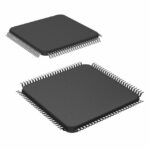 DS90CR485VS/NOPB
The activity of extra discounts on wholesale prices is in full swing…
Please fill in your contact information and we will send you the latest wholesale price list.





