 ChipApex | Global Electronic Components Supplier
SEARCH
Search Product
Search Post
— IC芯片 | 连接器 | 传感器 | 被动器件 —
Search productSearch post
— IC芯片 | 连接器 | 传感器 | 被动器件 —
Consult the customer manager about the wholesale price.
consultation hotline:86-132-6715-2157
email:[email protected]
Contact the product manager for consultation. One-stop consultation is available.
Do you want a lower wholesale price? Please send us your inquiry and we will reply immediately.
The DSC557-0333SI1T is a two-output PCI Express clock generator from Microchip Technology, utilizing silicon MEMS technology to eliminate the need for external quartz crystals. It provides a 100 MHz differential LVDS output with an integrated PLL and operates within a supply voltage range of 2.25V to 3.6V. The device complies with PCIe Gen1 through Gen4 common clock specifications and features an active-high Output Enable (OE) pin. Packaged in a 16-TSSOP format, it supports industrial temperature ranges from -40°C to +85°C.
Verify the package type against official documentation, as datasheet references typically indicate a 14-Lead QFN while local sources specify 16-TSSOP. Confirm the specific suffix 'I1' corresponds to the Industrial temperature grade (-40°C to +85°C) and ±50 ppm frequency stability. Ensure compatibility with surface mount assembly processes and check for RoHS compliance status.
Select this component for designs requiring a crystal-less PCIe timing solution with LVDS outputs. The device supports multiple output formats including HCSL, LVDS, and LVCMOS; verify that the LVDS configuration meets system impedance requirements. Consider the space-saving aspect if replacing larger quartz oscillators, though package dimensions must be validated against the specific TSSOP variant selected.
The DSC557-03 series belongs to Microchip's family of silicon MEMS clock generators designed to replace traditional quartz and SAW technologies. This series accelerates product development by offering high reliability and excellent shock and vibration immunity qualified to MIL-STD-883 standards. The DSC557-03 specifically targets PCIe applications, providing stable 100 MHz clocks across various supply voltages and temperatures.
Direct replacements include other DSC557-03 variants with different output formats or packages, such as those in 14-Lead QFN. Cross-reference with older ICS557-03 models for footprint compatibility if transitioning from legacy designs. Verify that substitute parts maintain the required LVDS output characteristics and PCIe jitter specifications.
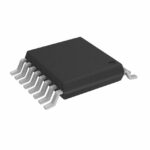 DSC557-0333SI1T
The activity of extra discounts on wholesale prices is in full swing…
Please fill in your contact information and we will send you the latest wholesale price list.






