 ChipApex | Global Electronic Components Supplier

SEARCH
Search Product
Search Post
— IC芯片 | 连接器 | 传感器 | 被动器件 —
Search productSearch post
— IC芯片 | 连接器 | 传感器 | 被动器件 —
Consult the customer manager about the wholesale price.
consultation hotline:86-132-6715-2157
email:[email protected]
Contact the product manager for consultation. One-stop consultation is available.
Do you want a lower wholesale price? Please send us your inquiry and we will reply immediately.
The DSC8102BI2 is a field-programmable MEMS oscillator from the DSC8102 series, manufactured by Microchip Technology. It operates within a supply voltage range of 2.25V to 3.6V and supports frequencies up to 460 MHz with an overall frequency stability of ±25ppm. The device features LVPECL output type and includes a standby function for power management. It is housed in a 6-VDFN package measuring 5.00mm x 3.20mm with a maximum height of 0.90mm. The component is rated for an operating temperature range of -40°C to +85°C and holds AEC-Q100 qualification.
Verify the specific ordering suffix to confirm the exact frequency, package variant, and packing media (tube) prior to purchase. Ensure the selected part matches the required output voltage levels and load conditions for your circuit design. Confirm that the programming tool compatibility aligns with your development workflow. Check for any recent Product Change Notifications regarding marking or assembly locations.
Select this component when a drop-in replacement for standard 6-pin LVPECL quartz oscillators is needed. Consider the DSC8102 series for its small form factor and low jitter characteristics. Evaluate the need for field-programmability versus fixed-frequency alternatives based on production volume and testing requirements. Ensure the supply voltage range matches the system's power rails.
The DSC8102BI2 belongs to the DSC8102/DSC8122 family of programmable low-jitter precision oscillators. These devices are designed as direct replacements for traditional quartz oscillators, offering flexibility in frequency selection without custom manufacturing delays. The BI2 suffix typically denotes a specific package and temperature grade configuration within the broader product line.
This component serves as a drop-in replacement for standard 6-pin LVPECL quartz oscillators. When substituting, verify that the new MEMS-based device meets the same footprint and pinout requirements. Ensure the jitter specifications and frequency stability of the replacement match or exceed the original design constraints.
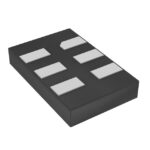 DSC8102BI2

The activity of extra discounts on wholesale prices is in full swing…
Please fill in your contact information and we will send you the latest wholesale price list.





