 ChipApex | Global Electronic Components Supplier

SEARCH
Search Product
Search Post
— IC芯片 | 连接器 | 传感器 | 被动器件 —
Search productSearch post
— IC芯片 | 连接器 | 传感器 | 被动器件 —
Consult the customer manager about the wholesale price.
consultation hotline:86-132-6715-2157
email:[email protected]
Contact the product manager for consultation. One-stop consultation is available.
Do you want a lower wholesale price? Please send us your inquiry and we will reply immediately.
The DSC8103BL5T is a programmable MEMS oscillator manufactured by Microchip Technology. It operates within a supply voltage range of 2.25V to 3.6V and delivers an LVDS output signal. The device supports a frequency range from 10MHz to 460MHz with a frequency stability of ±10ppm. Key electrical parameters include a maximum supply current of 32mA during operation and a standby current of 95µA maximum. The component is housed in a 6-VDFN surface-mount package measuring 5.00mm x 3.20mm with a maximum height of 0.90mm.
Verify the specific suffix designation to ensure compatibility with required frequency and voltage specifications. Confirm that the 6-VDFN package dimensions align with the target PCB footprint. Check RoHS compliance status if environmental regulations apply to the end product. Ensure the LVDS output type matches the receiving circuit requirements. Validate the operating temperature range against application conditions.
Select this component when a programmable MEMS solution is preferred over traditional quartz crystals for size and durability. Consider the LVDS output requirement for noise immunity in high-speed designs. Evaluate the standby current specification if power management is critical. Ensure the input voltage range fits the system power rail. Verify frequency stability needs against the ±10ppm specification.
This part belongs to the DSC8103 series of programmable oscillators from Microchip Technology. The series utilizes MEMS technology to replace traditional crystal oscillators, offering improved shock resistance and smaller form factors. The BL5 variant specifically denotes the 6-VDFN package configuration with LVDS output capabilities suitable for modern digital systems.
Direct replacements must match the 6-VDFN package and LVDS output type. Frequency compatibility within the 10MHz to 460MHz range is essential. Verify supply voltage compatibility between 2.25V and 3.6V. Cross-reference pinouts and electrical characteristics with the original datasheet to ensure functional equivalence.
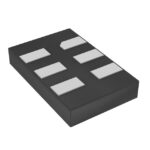 DSC8103BL5T

The activity of extra discounts on wholesale prices is in full swing…
Please fill in your contact information and we will send you the latest wholesale price list.





