 ChipApex | Global Electronic Components Supplier

SEARCH
Search Product
Search Post
— IC芯片 | 连接器 | 传感器 | 被动器件 —
Search productSearch post
— IC芯片 | 连接器 | 传感器 | 被动器件 —
Consult the customer manager about the wholesale price.
consultation hotline:86-132-6715-2157
email:[email protected]
Contact the product manager for consultation. One-stop consultation is available.
Do you want a lower wholesale price? Please send us your inquiry and we will reply immediately.
The DSC8122AI2 is a programmable MEMS oscillator from Microchip Technology, featuring LVPECL output. It operates within a frequency range of 10 MHz to 460 MHz with a stability of ±25 ppm. Powered by 2.25 V to 3.6 V, it draws a maximum supply current of 58 mA and 22 mA in disable mode. The device supports enable/disable functionality and functions across -40°C to 85°C. It is housed in a 6-SMD, no-lead package measuring 7.00 mm x 5.00 mm x 0.90 mm.
Verify the specific suffix codes against official Microchip documentation to ensure correct temperature range and packaging options. Confirm that the blank programmable nature aligns with your production programming capabilities. Check for AEC-Q100 automotive qualification if required for your specific application environment. Ensure compatibility with your system's voltage levels and signal integrity requirements before finalizing procurement.
Select this component when LVPECL outputs are required for frequencies up to 460 MHz. Consider the ±25 ppm stability specification for timing-critical designs. Evaluate the 6-SMD package size constraints against your PCB layout. Verify that the 2.25 V to 3.6 V supply range matches your system power rails. Assess the need for programmable flexibility versus fixed-frequency alternatives.
Part of the DSC8122 series, this oscillator represents Microchip's MEMS-based clock solutions. It complements other programmable oscillators like the DSC8121AL2, differing primarily in output type and frequency range. The series emphasizes reliability and performance for demanding electronic applications.
DSC8122CL2T offers similar specifications but operates up to 105°C and features CMOS output instead of LVPECL. DSC8121AL2 provides CMOS output with a lower maximum frequency of 170 MHz. Verify electrical compatibility and pinout alignment before substitution.
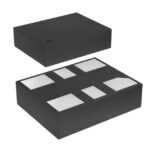 DSC8122AI2

The activity of extra discounts on wholesale prices is in full swing…
Please fill in your contact information and we will send you the latest wholesale price list.





