 ChipApex | Global Electronic Components Supplier

SEARCH
Search Product
Search Post
— IC芯片 | 连接器 | 传感器 | 被动器件 —
Search productSearch post
— IC芯片 | 连接器 | 传感器 | 被动器件 —
Consult the customer manager about the wholesale price.
consultation hotline:86-132-6715-2157
email:[email protected]
Contact the product manager for consultation. One-stop consultation is available.
Do you want a lower wholesale price? Please send us your inquiry and we will reply immediately.
The DSC8123BI5 is a programmable MEMS oscillator manufactured by Microchip Technology, designed for precision timing applications. It operates within a frequency range of 10 MHz to 460 MHz and maintains a frequency stability of 10 ppm. The device supports an LVDS output format and functions on a supply voltage between 2.25 V and 3.6 V. It features a low-jitter profile and includes enable/disable control capabilities. The component is housed in a compact 6-VDFN package with dimensions of 2.5 mm x 2 mm x 0.85 mm. It is rated for operation across a temperature range from -40°C to +85°C.
Verify that the specific part number matches the required frequency and output configuration before ordering. Confirm that the 6-VDFN package type aligns with the PCB footprint design. Ensure that the operating temperature range of -40°C to +85°C meets the environmental requirements of the target application. Check for any specific revision or suffix variations that may affect electrical characteristics or packaging.
Select this component when a programmable solution with LVDS outputs is required for frequencies up to 460 MHz. Consider the 10 ppm stability specification for applications sensitive to frequency drift. Evaluate the 2.25 V to 3.6 V supply range against the system power architecture. The compact 6-VDFN package makes it suitable for space-constrained designs compared to larger oscillator packages.
This part belongs to the DSC8123 series of programmable MEMS oscillators from Microchip Technology. The series is characterized by its ability to provide precise clock signals with low jitter. The BI5 suffix typically denotes specific pinout and package configurations within the product line. These oscillators are engineered to replace traditional quartz crystals and resonators in modern electronic designs.
Direct substitutes include other parts from the DSC8123 family with compatible pinouts and specifications. Verify that alternative components support the same LVDS output format and frequency range. Ensure that replacement parts meet the same 10 ppm stability and temperature range requirements. Cross-reference datasheets to confirm identical package dimensions for mechanical fit.
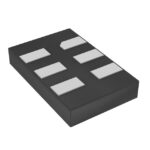 DSC8123BI5

The activity of extra discounts on wholesale prices is in full swing…
Please fill in your contact information and we will send you the latest wholesale price list.





