ChipApex | Global Electronic Components Supplier
SEARCH
Search Product
Search Post
— IC芯片 | 连接器 | 传感器 | 被动器件 —
Search productSearch post
— IC芯片 | 连接器 | 传感器 | 被动器件 —
Consult the customer manager about the wholesale price.
consultation hotline:86-132-6715-2157
email:[email protected]
Contact the product manager for consultation. One-stop consultation is available.
Do you want a lower wholesale price? Please send us your inquiry and we will reply immediately.
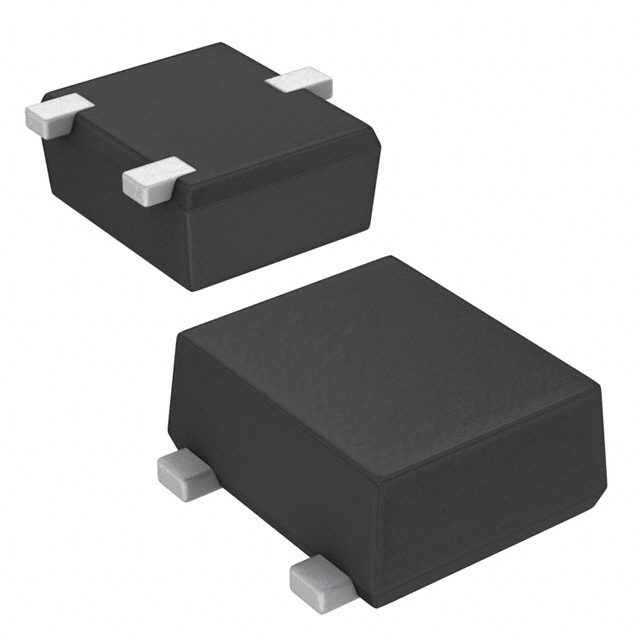
The DTA123YU3HZGT106 is a PNP digital transistor manufactured by ROHM Semiconductor, designed for surface-mount applications in the SOT-323 (UMT3) package. It integrates bias resistors to simplify circuit design, eliminating the need for external components. Key electrical specifications include a collector-emitter voltage of -50V and a continuous collector current of -100mA. The device features a typical input resistance (R1) of 2.2 kOhms and an emitter-base resistance (R2) of 10 kOhms. It operates with a maximum power dissipation of 200mW and supports a transition frequency up to 250 MHz. The component meets AEC-Q101 automotive standards and functions within a temperature range of -55°C to +150°C.
Verify the specific ordering suffix to ensure correct packaging format, as variations exist between reel, cut tape, and MouseReel options. Confirm that the selected variant matches the required resistor values and package dimensions for your specific PCB footprint. Always cross-reference the latest datasheet for any updates to mechanical drawings or electrical characteristics before finalizing procurement orders.
Select this component when a PNP digital transistor with -50V rating and -100mA current capacity is required in a compact SOT-323 package. Ensure the application demands the specific 2.2kΩ/10kΩ resistor ratio provided by this part number. Verify that the operating temperature range extends to +150°C if high thermal conditions are expected in the target environment.
This part belongs to the DTA123 series of bias resistor built-in transistors from ROHM Semiconductor. The series offers various configurations with different resistor ratios and packages to suit diverse digital switching needs. The DTA123YU3HZGT106 specifically targets automotive applications due to its AEC-Q101 certification and robust performance characteristics in compact form factors.
The DTA123YU3HZG is listed as a similar level replacement with the same pinout and package. Verify that the resistor values and electrical parameters match the original design requirements before substituting.
 DTA123YU3HZGT106
The activity of extra discounts on wholesale prices is in full swing…
Please fill in your contact information and we will send you the latest wholesale price list.