ChipApex | Global Electronic Components Supplier
SEARCH
Search Product
Search Post
— IC芯片 | 连接器 | 传感器 | 被动器件 —
Search productSearch post
— IC芯片 | 连接器 | 传感器 | 被动器件 —
Consult the customer manager about the wholesale price.
consultation hotline:86-132-6715-2157
email:[email protected]
Contact the product manager for consultation. One-stop consultation is available.
Do you want a lower wholesale price? Please send us your inquiry and we will reply immediately.
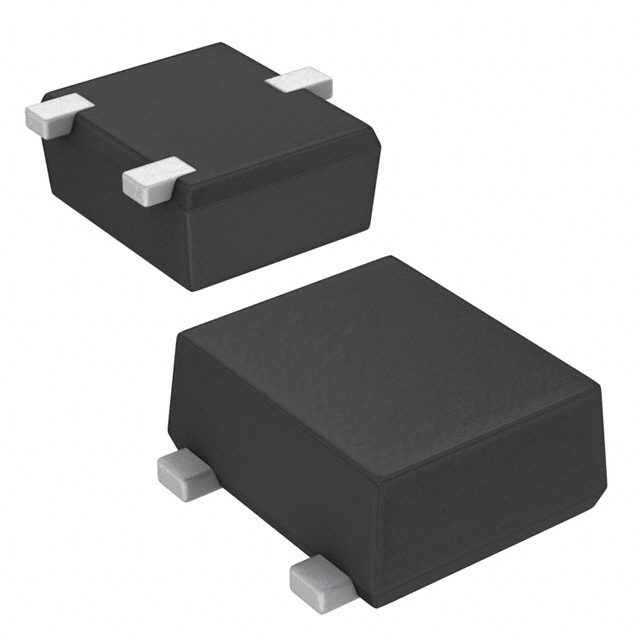
The DTA124XU3T106 is a single PNP digital transistor manufactured by ROHM Semiconductor, housed in an SMD/SMT UMT3 (SOT-323-3) package. It features built-in bias resistors with typical values of R1 = 22 kOhms and R2 = 47 kOhms. The device supports a collector-emitter voltage (VCEO) of -50 V and a continuous collector current of -100 mA. Key electrical parameters include a DC current gain (hFE) minimum of 68 at -5 mA/-5 V, a maximum operating frequency of 250 MHz, and power dissipation of 200 mW. The emitter-base voltage (VEBO) is rated at -5 V, with a saturation voltage of 300 mV at specific test conditions.
Verify the specific suffix T106 corresponds to the tape and reel packaging configuration when ordering. Confirm that the UMT3 package dimensions align with the target PCB footprint. Ensure the PNP polarity matches the circuit design requirements, as NPN alternatives like the DTC124X series are complementary but not interchangeable without schematic modification.
Select this component when a pre-biased PNP transistor is required for digital switching. The fixed resistor ratio of approximately 2.1 suits standard logic levels. Consider the thermal performance given the 200 mW dissipation limit in small packages. Verify compatibility with the system's voltage rails, as the -50 V rating provides margin for most low-voltage digital systems.
This part belongs to the DTA124X series of pre-biased transistors from ROHM Semiconductor. It is the PNP counterpart to the DTC124X NPN series. The UMT3 package is a standard small-outline transistor form factor widely used in consumer electronics. The product is classified as a Bias Resistor Built-in Transistor (BRBT), designed to reduce component count and assembly time in digital circuits.
The DTC124XU3T106 serves as the direct NPN complementary replacement for inverted logic designs. Other DTA124 variants with different resistor values or packages may require schematic adjustments. Verify pinout compatibility before substituting with generic PNP transistors, as internal resistor networks differ significantly from discrete components.
 DTA124XU3T106
The activity of extra discounts on wholesale prices is in full swing…
Please fill in your contact information and we will send you the latest wholesale price list.