ChipApex | Global Electronic Components Supplier
SEARCH
Search Product
Search Post
— IC芯片 | 连接器 | 传感器 | 被动器件 —
Search productSearch post
— IC芯片 | 连接器 | 传感器 | 被动器件 —
Consult the customer manager about the wholesale price.
consultation hotline:86-132-6715-2157
email:[email protected]
Contact the product manager for consultation. One-stop consultation is available.
Do you want a lower wholesale price? Please send us your inquiry and we will reply immediately.
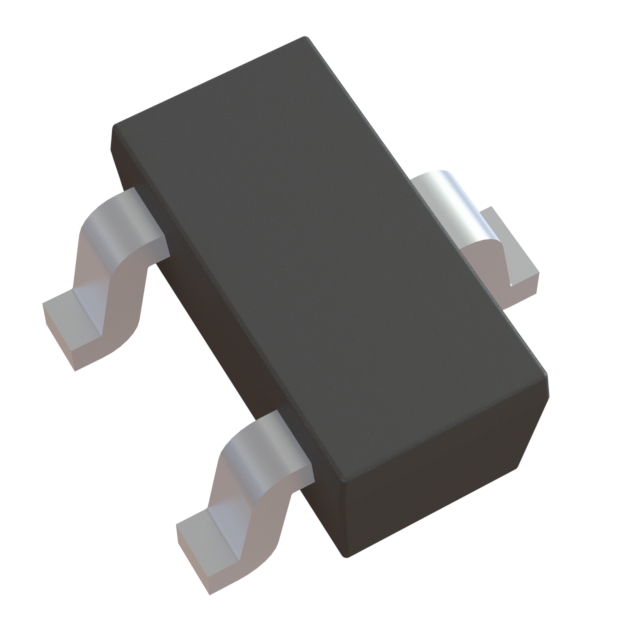
The DTB513ZETL is a single PNP digital transistor manufactured by ROHM Semiconductor, housed in an SOT-416 (EMT3) surface-mount package. It integrates bias resistors with a typical input resistance of 1 kOhms and a resistor ratio of 10. The device supports a maximum collector current of -500 mA and a collector-emitter voltage of -12 V. Key electrical parameters include a minimum DC current gain (hFE) of 140 at -100 mA and -2 V, a transition frequency of 260 MHz, and a power dissipation rating of 150 mW. It operates within a temperature range up to +150°C.
Verify the specific suffix 'ETL' corresponds to the required tape-and-reel packaging configuration, as standard variants may differ in shipping format. Confirm RoHS compliance status through the official datasheet before finalizing procurement specifications. Ensure the ordering quantity aligns with the manufacturer's standard reel size requirements to avoid partial reel handling issues during production.
Select this component when a PNP digital transistor with a 1 kOhm base resistor is required for low-current switching tasks. Compare against the NPN counterpart DTD513ZETL if complementary polarity is needed. Verify that the -12 V breakdown voltage meets the system's supply constraints. Check thermal management requirements against the 150 mW power dissipation limit under expected operating conditions.
This part belongs to the DTB513ZE series of pre-biased transistors from ROHM Semiconductor. It is functionally related to other digital transistors like the DTC143ZETL but differs in polarity and current ratings. The EMT3 package offers a small footprint compared to larger discrete transistor assemblies, facilitating dense PCB layouts in modern consumer electronics.
Publicly confirmed substitute part numbers are not available in the provided documentation. Designers should consult the manufacturer's latest replacement guide or contact technical support directly for qualified alternatives. Do not assume pin-compatible substitutes without verifying internal resistor values and electrical characteristics against the original specification sheet.
 DTB513ZETL
The activity of extra discounts on wholesale prices is in full swing…
Please fill in your contact information and we will send you the latest wholesale price list.