ChipApex | Global Electronic Components Supplier
SEARCH
Search Product
Search Post
— IC芯片 | 连接器 | 传感器 | 被动器件 —
Search productSearch post
— IC芯片 | 连接器 | 传感器 | 被动器件 —
Consult the customer manager about the wholesale price.
consultation hotline:86-132-6715-2157
email:[email protected]
Contact the product manager for consultation. One-stop consultation is available.
Do you want a lower wholesale price? Please send us your inquiry and we will reply immediately.
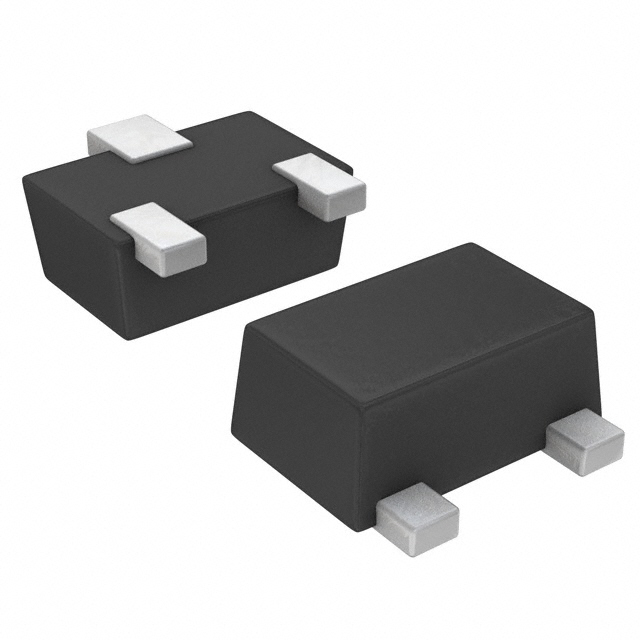
The DTB543XMT2L is a PNP digital transistor manufactured by ROHM Semiconductor, featuring built-in bias resistors within a VMT-3 (SOT-723) surface-mount package. It operates with a maximum collector-emitter voltage of -12V and supports a continuous collector current of -0.5A. The device includes an input resistor of 4.7kΩ and an emitter-base resistance of 47kΩ, yielding a typical resistance ratio of 10. Key electrical parameters include a minimum DC current gain (hFE) of 140 at -100mA and -2V, a maximum operating frequency of 260MHz, and a power dissipation rating of 150mW. The component is rated for operation up to +150°C and is designated as NRND.
Verify the NRND status before integration into new designs, as this indicates the component is not recommended for future development. Confirm availability through authorized distributors, noting that standard packaging quantities may apply. Ensure compliance with RoHS directives if required by the target application environment. Cross-reference datasheet revisions to confirm pinout consistency with existing layouts.
Select this component when a PNP digital transistor with high current capability (-0.5A) and moderate voltage rating (-12V) is required. The fixed 4.7kΩ input resistance suits direct logic interfacing without external pull-up components. Consider the VMT-3 package size constraints during PCB layout planning. Evaluate thermal management requirements given the 150mW power dissipation limit in compact surface-mount applications.
This part belongs to the DTB543 series of digital transistors from ROHM Semiconductor. It serves as the PNP counterpart to NPN variants like the DTD543 series. The VMT-3 package provides a compact footprint suitable for space-constrained portable devices. The series emphasizes ease of use by integrating biasing networks directly onto the silicon die.
Direct substitutes include other PNP digital transistors in SOT-723 packages with similar electrical characteristics. Verify equivalent hFE, VCEO, and IC ratings when cross-referencing with competitors' offerings. Ensure the replacement maintains the same pin configuration to avoid PCB redesign efforts.
 DTB543XMT2L
The activity of extra discounts on wholesale prices is in full swing…
Please fill in your contact information and we will send you the latest wholesale price list.