ChipApex | Global Electronic Components Supplier
SEARCH
Search Product
Search Post
— IC芯片 | 连接器 | 传感器 | 被动器件 —
Search productSearch post
— IC芯片 | 连接器 | 传感器 | 被动器件 —
Consult the customer manager about the wholesale price.
consultation hotline:86-132-6715-2157
email:[email protected]
Contact the product manager for consultation. One-stop consultation is available.
Do you want a lower wholesale price? Please send us your inquiry and we will reply immediately.
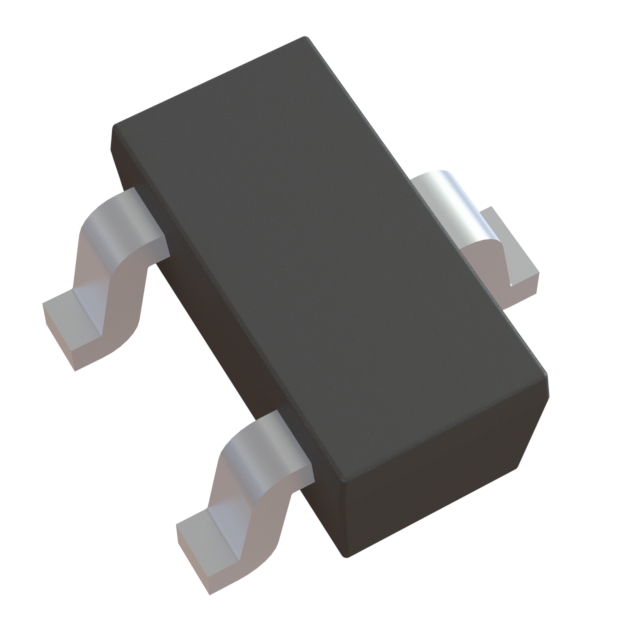
The DTC114TETL is a single NPN digital transistor manufactured by Rohm Semiconductor, housed in an EMT3 (SOT-416) surface-mount package. It integrates biasing resistors to simplify circuit design. Key electrical parameters include a collector-emitter breakdown voltage of 50 V and a maximum continuous collector current of 100 mA. The device features a built-in base resistor of 10 kOhms and achieves a minimum DC current gain (hFE) of 100 at 1 mA and 5 V. It operates with a transition frequency of 250 MHz and supports a power dissipation of 150 mW across a temperature range of -55 °C to +150 °C.
Verify the specific ordering suffix to confirm the packaging format, such as tape and reel or cut tape, as these affect handling procedures. Ensure compatibility with existing PCB footprints designated for the SOT-416 or EMT3 package type. Confirm RoHS compliance status if required by project specifications. Cross-reference the manufacturer's latest datasheet for any updates on recommended operating conditions.
Select this component when a compact NPN solution with integrated biasing is required for space-constrained designs. The 10 kOhm internal resistor value suits standard logic interface levels. Consider the 150 mW power dissipation limit during thermal analysis. Compare against complementary PNP types like the DTA114 series if push-pull configurations are needed.
This part belongs to Rohm's DTC114 family of digital transistors, which are designed to replace discrete resistor-transistor networks. The EMT3 package provides a small footprint ideal for dense board layouts. The product is currently listed as active, supporting ongoing manufacturing needs without immediate obsolescence risks associated with legacy components.
Direct substitutes within the same family include the DTC114YE variants, though pinout and resistance values must be verified. Alternative packages like SOT-23 offer similar functionality but require layout adjustments. Always validate electrical characteristics against the original design requirements before substitution.
 DTC114TETL
The activity of extra discounts on wholesale prices is in full swing…
Please fill in your contact information and we will send you the latest wholesale price list.