 ChipApex | Global Electronic Components Supplier
SEARCH
Search Product
Search Post
— IC芯片 | 连接器 | 传感器 | 被动器件 —
Search productSearch post
— IC芯片 | 连接器 | 传感器 | 被动器件 —
Consult the customer manager about the wholesale price.
consultation hotline:86-132-6715-2157
email:[email protected]
Contact the product manager for consultation. One-stop consultation is available.
Do you want a lower wholesale price? Please send us your inquiry and we will reply immediately.
The DTA115TET1G is a PNP digital transistor manufactured by onsemi, belonging to the DTA115TE series. It integrates a single PNP transistor with built-in biasing resistors in a compact surface-mount package. The device is designed for switching applications requiring simplified circuit design by eliminating external base resistors. Key electrical characteristics include a collector-emitter voltage rating of 50V and a continuous collector current capability of 100mA. The component features an input resistance (R1) of 100 kOhms and an emitter-base resistance (R2) of 100 kOhms, providing a typical resistor ratio of 1. It operates within a temperature range from -55°C to +150°C and has a power dissipation rating of 260 mW.
Verify end-of-life status carefully as this component is marked obsolete. Confirm availability through authorized distributors only, noting potential long lead times or limited stock. Ensure RoHS compliance documentation is obtained prior to procurement. Validate that the SOT-723 package matches your PCB footprint requirements. Check for alternative sources if production continuity is critical.
Select this part for PNP switching applications requiring integrated biasing. Compare against NPN equivalents like DTC115TET1G if polarity differs. Consider thermal management due to 260 mW dissipation limit. Verify input resistance values match your drive source impedance. Ensure operating voltage stays below 50V VCEO rating.
This component belongs to onsemi's DTA115TE series of pre-biased transistors. It serves as the PNP counterpart to the NPN DTC115TET1G. The series is designed for general-purpose digital switching where space and bill-of-materials reduction are priorities. It replaces discrete transistor-resistor combinations in standard logic interface designs.
Public confirmed substitutes include DTC115TET1G (NPN equivalent). Cross-reference with DDTC115TE-7-F from Diodes Incorporated for pin-compatible alternatives. Verify package compatibility and electrical parameter alignment before substitution.
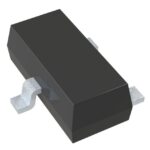 DTC115TET1G
The activity of extra discounts on wholesale prices is in full swing…
Please fill in your contact information and we will send you the latest wholesale price list.





