ChipApex | Global Electronic Components Supplier

SEARCH
Search Product
Search Post
— IC芯片 | 连接器 | 传感器 | 被动器件 —
Search productSearch post
— IC芯片 | 连接器 | 传感器 | 被动器件 —
Consult the customer manager about the wholesale price.
consultation hotline:86-132-6715-2157
email:[email protected]
Contact the product manager for consultation. One-stop consultation is available.
Do you want a lower wholesale price? Please send us your inquiry and we will reply immediately.
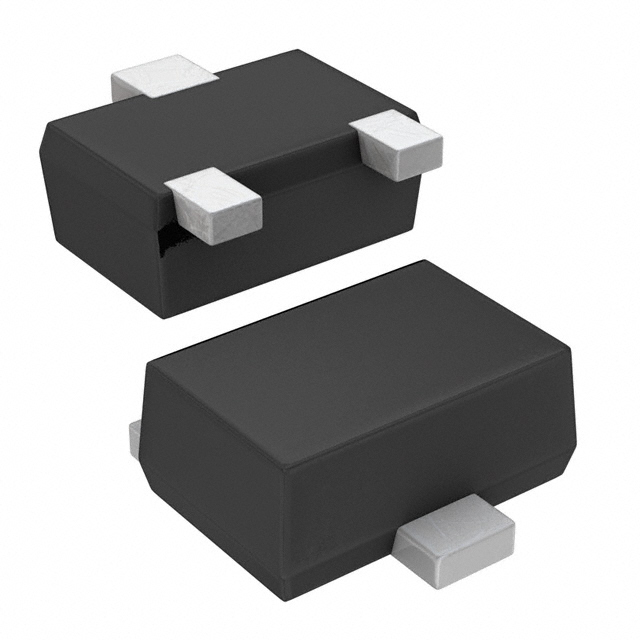
The DTC124EUBHZGTL is an NPN digital transistor from ROHM Semiconductor, featuring built-in biasing resistors to simplify circuit design. It operates with a collector current of 0.1 A and a supply voltage of 50 V. The device integrates two resistors: R1 at 22 kΩ and R2 at 22 kΩ, maintaining a ratio of 1. Packaged in the UMT3F (SOT-323) surface-mount format, it supports a maximum power dissipation of 200 mW. The component is RoHS compliant and supplied in tape-and-reel packaging with a unit quantity of 3000.
Verify the specific ordering suffix against the manufacturer's current datasheet to ensure package and reel specifications match the design requirement. Confirm that the component status aligns with project lifecycle needs, as availability may vary. Ensure compliance with RoHS directives and check for any automotive qualification requirements if the application demands higher reliability standards beyond standard industrial grades.
Select this component when an NPN digital transistor with equal internal resistors (R1=R2=22kΩ) is required. It is suitable for designs needing a single pre-biased transistor in a small footprint. Consider complementary PNP types like the DTA124E series if push-pull configurations are necessary. Verify that the 50V collector-emitter voltage and 100mA current ratings meet the load requirements.
This part belongs to the ROHM DTC124 series of digital transistors, which are designed to replace discrete resistor-transistor combinations. The 'EUBH' suffix typically denotes specific packaging and environmental compliance attributes within the product line. These devices are engineered to reduce board space and assembly costs by integrating the bias network directly into the semiconductor package.
The DTC124EU3HZGT106 is listed as a similar specification alternative within the same family. Verify pin compatibility and exact resistance values before substitution. Other NPN digital transistors with similar R1/R2 ratios may serve as functional equivalents if electrical parameters align with the original design constraints.
 DTC124EUBHZGTL

The activity of extra discounts on wholesale prices is in full swing…
Please fill in your contact information and we will send you the latest wholesale price list.