ChipApex | Global Electronic Components Supplier

SEARCH
Search Product
Search Post
— IC芯片 | 连接器 | 传感器 | 被动器件 —
Search productSearch post
— IC芯片 | 连接器 | 传感器 | 被动器件 —
Consult the customer manager about the wholesale price.
consultation hotline:86-132-6715-2157
email:[email protected]
Contact the product manager for consultation. One-stop consultation is available.
Do you want a lower wholesale price? Please send us your inquiry and we will reply immediately.
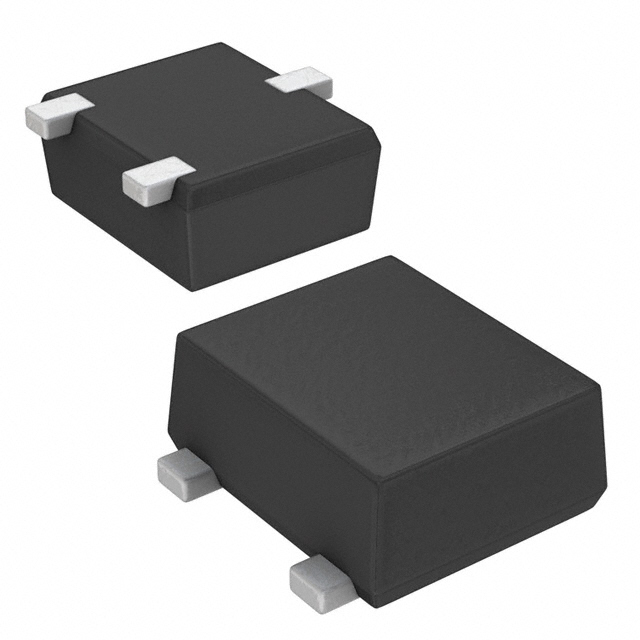
The DTC125TUAT106 is a single NPN digital transistor manufactured by ROHM Semiconductor, housed in an SOT-323-3 surface-mount package. It features a built-in input resistor with a typical value of 200 kOhms. The device supports a maximum collector-emitter voltage (VCEO) of 50 V and a continuous collector current of 100 mA. Key electrical parameters include a minimum DC current gain (hFE) of 100 at 1 mA and 5 V, a maximum operating frequency of 250 MHz, and a power dissipation rating of 200 mW. The emitter-base voltage (VEBO) is rated at 5 V, and the component operates within a temperature range up to +150 C.
Verify the current lifecycle status before integration, as this component is marked as Not Recommended for New Designs (NRND). Confirm availability through authorized distributors, noting that supply may be limited to existing customer support. Ensure compliance with RoHS directives and check for alternative lead times if immediate procurement is required for production runs.
Select this component when a pre-biased NPN transistor with a high input resistance (200 kOhms) is required. Compare against similar models like the DTC124TUA if lower input resistance is needed. Consider the SOT-323-3 footprint constraints and verify that the 50 V voltage rating meets the specific circuit requirements. Evaluate thermal management needs given the 200 mW power dissipation limit.
This part belongs to the DTC125TUA series of digital transistors from ROHM Semiconductor. It shares the same core specifications as the DTC125TUA but includes specific taping and packaging identifiers. The series represents standard digital transistors designed for replacing discrete resistor-transistor combinations in modern electronic assemblies.
Publicly confirmed substitute part numbers are not explicitly listed in the provided documentation. Engineers should consult official ROHM resources or distributor cross-reference tools for compatible alternatives, keeping in mind the NRND status which may necessitate designing around available stock or newer equivalents.
 DTC125TUAT106

The activity of extra discounts on wholesale prices is in full swing…
Please fill in your contact information and we will send you the latest wholesale price list.