ChipApex | Global Electronic Components Supplier

SEARCH
Search Product
Search Post
— IC芯片 | 连接器 | 传感器 | 被动器件 —
Search productSearch post
— IC芯片 | 连接器 | 传感器 | 被动器件 —
Consult the customer manager about the wholesale price.
consultation hotline:86-132-6715-2157
email:[email protected]
Contact the product manager for consultation. One-stop consultation is available.
Do you want a lower wholesale price? Please send us your inquiry and we will reply immediately.
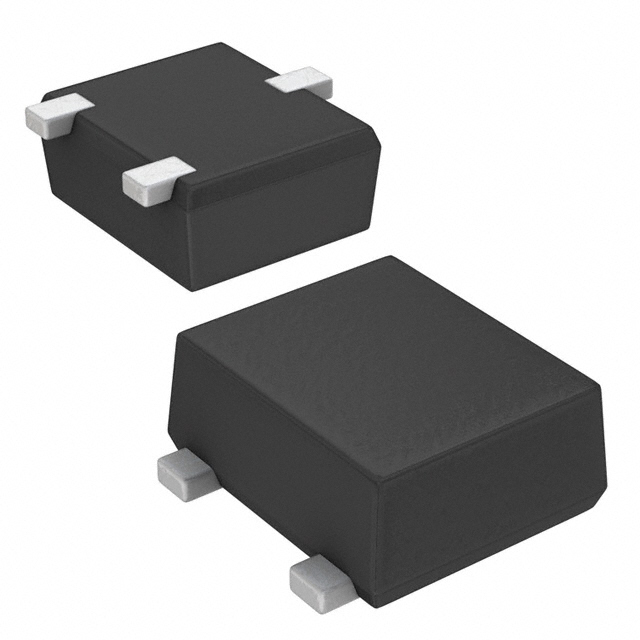
The DTC143TU3T106 is a single NPN digital transistor manufactured by ROHM Semiconductor, housed in an SOT-323 (UMT3) surface-mount package. It integrates a bias resistor network consisting of a single base resistor (R1) with a typical value of 4.7 kOhms. Key electrical specifications include a collector-emitter breakdown voltage (VCEO) of 50 V, a continuous collector current (Ic) of 100 mA, and a maximum power dissipation (Pd) of 200 mW. The device features a transition frequency of 250 MHz and a minimum DC current gain (hFE) of 100 at 1 mA and 5 V. It operates within a temperature range up to +150°C and complies with RoHS3 standards.
Verify component authenticity through authorized distribution channels or direct manufacturer confirmation. Ensure the ordering suffix matches the required tape-and-reel or cut-tape format. Confirm compliance with specific environmental regulations such as RoHS3 if mandated by the end product. Cross-reference datasheet revisions to ensure parameter consistency with existing design specifications.
Select this component when a single NPN digital transistor with a 4.7 kOhm base resistor is required. Compare against alternatives like DTC143XU3T106 if dual resistors are needed. Consider the SOT-323 package dimensions for PCB layout constraints. Verify that the 50 V voltage rating and 100 mA current capacity meet the load requirements of the target application.
This part belongs to the ROHM DTC143TU3 series of pre-biased NPN transistors. It shares the same internal circuit topology and electrical characteristics as other variants in the series but differs in packaging or ordering suffixes. The series is widely used in consumer electronics and industrial control systems due to its reliability and long-term supply availability.
Direct pin-compatible substitutes within the same family include DTC143TU3 without the trailing suffix. For dual-resistor configurations, consider DTC143XU3T106. Always verify thermal performance and package compatibility before substitution.
It contains a single bias resistor connected to the base terminal with a typical resistance value of 4.7 kOhms.
The maximum power dissipation is specified as 200 mW.
Yes, it has a transition frequency of 250 MHz, making it suitable for high-speed switching applications.
 DTC143TU3T106

The activity of extra discounts on wholesale prices is in full swing…
Please fill in your contact information and we will send you the latest wholesale price list.