ChipApex | Global Electronic Components Supplier

SEARCH
Search Product
Search Post
— IC芯片 | 连接器 | 传感器 | 被动器件 —
Search productSearch post
— IC芯片 | 连接器 | 传感器 | 被动器件 —
Consult the customer manager about the wholesale price.
consultation hotline:86-132-6715-2157
email:[email protected]
Contact the product manager for consultation. One-stop consultation is available.
Do you want a lower wholesale price? Please send us your inquiry and we will reply immediately.
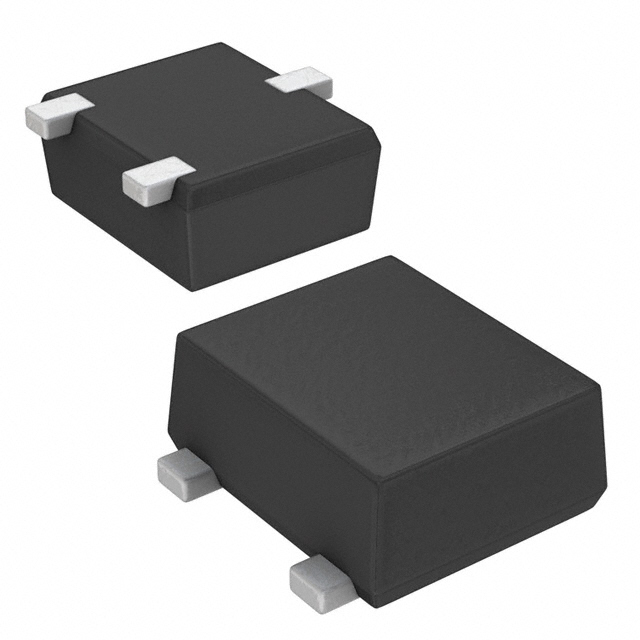
The DTC143ZU3T106 is a single NPN digital transistor manufactured by ROHM Semiconductor, housed in an SOT-323 (UMT3) surface-mount package. It features a built-in bias resistor network with typical values of 4.7 kOhms for the base resistor and a resistance ratio of 10. Key electrical specifications include a maximum collector-emitter voltage of 50 V, a continuous collector current of 100 mA, and a power dissipation rating of 200 mW. The device supports a maximum operating frequency of 250 MHz and maintains a minimum DC current gain (hFE) of 80 at 10 mA and 5 V. It operates within a temperature range up to +150°C.
Verify the specific suffix T106 against the manufacturer's latest datasheet to confirm tape-and-reel packaging details and lot traceability requirements. Ensure that the ordering documentation explicitly references the full part number to avoid confusion with similar variants lacking the automotive or specific grading suffixes if such distinctions are critical for the intended deployment environment.
Select this component when a compact NPN solution with integrated base biasing is required for space-constrained designs. The 4.7 kOhm input resistance offers a standard drive interface for many logic families. Consider the 50 V breakdown voltage and 100 mA current limit to ensure adequate headroom for the target application's voltage and load requirements without exceeding the 200 mW power dissipation limit.
This part belongs to the DTC143 series of pre-biased transistors from ROHM Semiconductor. The UMT3 package designation corresponds to the industry-standard SOT-323 form factor, widely used in portable electronics. The T106 suffix typically indicates the specific reel quantity and packaging format provided by the distributor, distinguishing it from cut-tape or bulk variations.
Direct substitutes may include other NPN digital transistors in SOT-323 packages with comparable 50V ratings and 4.7kOhm base resistors, such as those from ON Semiconductor or Diodes Inc., provided pinout compatibility and hFE characteristics align with the original design constraints.
 DTC143ZU3T106

The activity of extra discounts on wholesale prices is in full swing…
Please fill in your contact information and we will send you the latest wholesale price list.