ChipApex | Global Electronic Components Supplier

SEARCH
Search Product
Search Post
— IC芯片 | 连接器 | 传感器 | 被动器件 —
Search productSearch post
— IC芯片 | 连接器 | 传感器 | 被动器件 —
Consult the customer manager about the wholesale price.
consultation hotline:86-132-6715-2157
email:[email protected]
Contact the product manager for consultation. One-stop consultation is available.
Do you want a lower wholesale price? Please send us your inquiry and we will reply immediately.
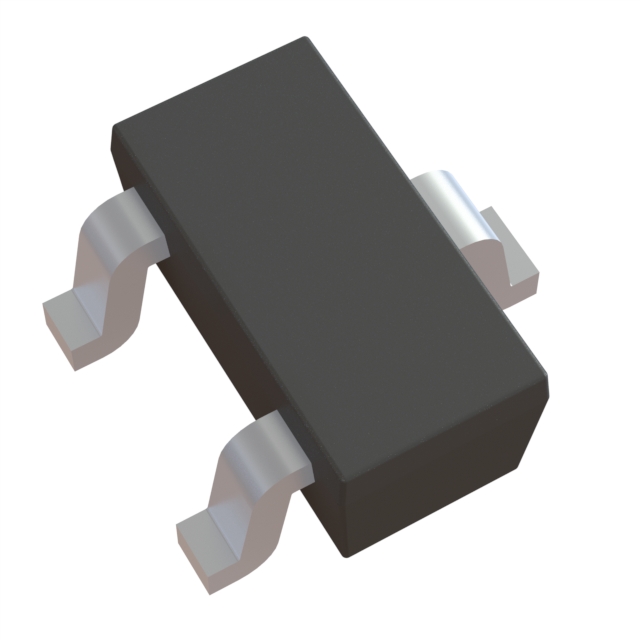
The DTC144WETL is an NPN digital transistor manufactured by ROHM Semiconductor, featuring built-in bias resistors in a compact SOT-416 (EMT3) surface-mount package. It operates with a supply voltage up to 50V and supports a continuous collector current of 100mA. The device integrates thin-film resistors for R1 and R2, offering typical values of 1kΩ and 47kΩ respectively, or alternative ratios such as 1kΩ/1kΩ depending on the specific variant configuration. With a power dissipation rating of 150mW and a minimum DC current gain (hFE) of 56, it is designed for efficient switching applications.
Verify the specific resistance ratio (R1/R2) required for your design, as the DTC144WE series includes variants with different resistor values such as 1kΩ/47kΩ or 1kΩ/1kΩ. Confirm that the SOT-416 package meets your board space constraints. Ensure the component status aligns with your project lifecycle needs, noting that some sources indicate this part may be restricted to existing customers rather than new designs.
Select the DTC144WETL when a compact NPN digital transistor with integrated biasing is needed for low-power switching. Compare its 100mA collector current and 50V voltage rating against other SOT-416 devices if higher current handling is required. Consider the complementary PNP type, DTA144WE, for push-pull configurations. Verify thermal performance under your expected load conditions given the 150mW power dissipation limit.
The DTC144WETL belongs to ROHM's standard digital transistor family, which utilizes thin-film technology for precise resistor integration. This series is distinct from automotive-grade parts like the DTC144EE3HZGTL, which carries AEC-Q101 certification. The DTC144WE series is generally intended for general-purpose electronics rather than high-reliability automotive applications.
Direct substitutes include other NPN digital transistors in the SOT-416 package with similar electrical characteristics. Check for compatible parts from other manufacturers that offer matching R1/R2 ratios and hFE ranges. Ensure any replacement maintains the same pinout and thermal capabilities.
 DTC144WETL

The activity of extra discounts on wholesale prices is in full swing…
Please fill in your contact information and we will send you the latest wholesale price list.