ChipApex | Global Electronic Components Supplier

SEARCH
Search Product
Search Post
— IC芯片 | 连接器 | 传感器 | 被动器件 —
Search productSearch post
— IC芯片 | 连接器 | 传感器 | 被动器件 —
Consult the customer manager about the wholesale price.
consultation hotline:86-132-6715-2157
email:[email protected]
Contact the product manager for consultation. One-stop consultation is available.
Do you want a lower wholesale price? Please send us your inquiry and we will reply immediately.
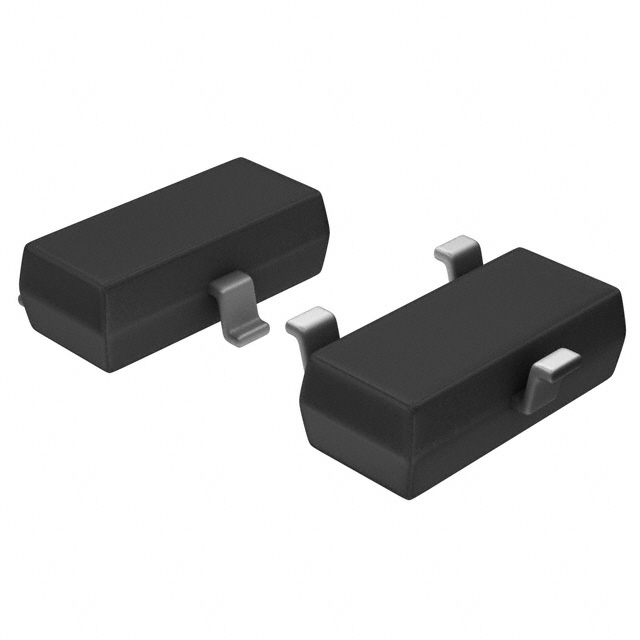
The DTD114ECHZGT116 is a single NPN digital transistor manufactured by Rohm Semiconductor, designed for surface-mount applications in the SST3 (SOT-23) package. It integrates biasing resistors to simplify circuit design. Key electrical parameters include a maximum collector-emitter voltage of 50 V and a continuous collector current of 500 mA. The device features a minimum DC current gain of 56 at 50 mA and 5 V, with a saturation voltage of 300 mV at 2.5 mA base current and 50 mA collector current. Internal resistances are specified as R1 = 10 kOhms and R2 = 10 kOhms. The component supports a transition frequency of 200 MHz and has a maximum power dissipation of 200 mW.
Verify the specific suffix GT116 corresponds to the tape-and-reel packaging format required for automated assembly processes. Confirm that the AEC-Q101 automotive qualification aligns with the target application's environmental stress requirements. Ensure the SOT-23 footprint matches the PCB layout constraints before finalizing procurement orders.
Select this component when a single NPN switch with integrated biasing is required for space-constrained designs. The 10 kOhm internal resistance values suit standard logic level driving. Consider the 500 mA current capacity and 50 V voltage rating against load requirements. Verify thermal management capabilities given the 200 mW power dissipation limit in the small outline package.
This part belongs to the DTD114 series of digital transistors from Rohm Semiconductor. It shares the same core transistor characteristics as the DTD114ECT116 but differs in packaging and specific manufacturing lot identifiers. The series is characterized by its integration of bias resistors within a compact SOT-23 form factor, targeting cost-sensitive and space-efficient electronic designs.
DTD114EKT146 by Rohm Semiconductor is listed as a parameter-equivalent alternative. DTD114EC-7-F by Diodes Incorporated is also identified as a substitute option. Verify pinout compatibility and exact resistance tolerances when substituting.
 DTD114ECHZGT116

The activity of extra discounts on wholesale prices is in full swing…
Please fill in your contact information and we will send you the latest wholesale price list.