ChipApex | Global Electronic Components Supplier

SEARCH
Search Product
Search Post
— IC芯片 | 连接器 | 传感器 | 被动器件 —
Search productSearch post
— IC芯片 | 连接器 | 传感器 | 被动器件 —
Consult the customer manager about the wholesale price.
consultation hotline:86-132-6715-2157
email:[email protected]
Contact the product manager for consultation. One-stop consultation is available.
Do you want a lower wholesale price? Please send us your inquiry and we will reply immediately.
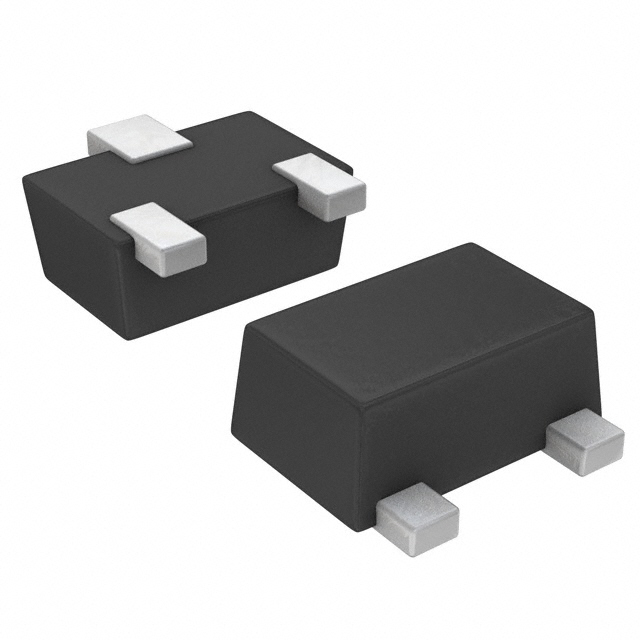
The DTD723YMT2L is an NPN digital transistor with built-in bias resistors from ROHM Semiconductor. It operates with a maximum collector current of 200mA and a supply voltage of 30V. The device features an input resistance (R1) of 2.2kΩ and an emitter-base resistance (R2) of 10kΩ, yielding a typical resistance ratio of 4.5. Packaged in the VMT3 (SC-105AA) surface-mount format, it includes a DC current gain (GI) of 140 minimum at specific test conditions. The component supports a junction temperature up to 150°C and is compliant with RoHS standards.
Verify the exact ordering suffix against the manufacturer's official documentation to ensure correct packaging and marking specifications. Confirm that the selected variant matches the required package code, such as VMT3 or EMT3, prior to procurement. Cross-reference the part number with the latest datasheet revision to validate electrical characteristics and absolute maximum ratings.
Select this component for general-use electronic equipment where simplified switching logic is required. Ensure the application voltage does not exceed the 30V supply limit and current requirements remain within the 200mA collector current rating. Consider the complementary DTB723Y series if a PNP configuration is necessary for the circuit design.
This component belongs to the DTD723Y series of NPN digital transistors manufactured by ROHM Semiconductor. It is designed for use in audio visual equipment, office automation, communication devices, and other consumer electronics. The series provides a compact solution for integrating biasing functions directly into the transistor package.
The complementary PNP type is the DTB723Y series. Verify pinout compatibility and electrical parameter alignment before substituting with other manufacturers' digital transistors.
The built-in bias resistors allow the configuration of an inverter circuit without connecting external input resistors.
Yes, the bias resistors consist of thin-film resistors with complete isolation, allowing for negative biasing of the input.
The typical resistance ratio (R2/R1) is 4.5.
 DTD723YMT2L

The activity of extra discounts on wholesale prices is in full swing…
Please fill in your contact information and we will send you the latest wholesale price list.