ChipApex | Global Electronic Components Supplier

SEARCH
Search Product
Search Post
— IC芯片 | 连接器 | 传感器 | 被动器件 —
Search productSearch post
— IC芯片 | 连接器 | 传感器 | 被动器件 —
Consult the customer manager about the wholesale price.
consultation hotline:86-132-6715-2157
email:[email protected]
Contact the product manager for consultation. One-stop consultation is available.
Do you want a lower wholesale price? Please send us your inquiry and we will reply immediately.
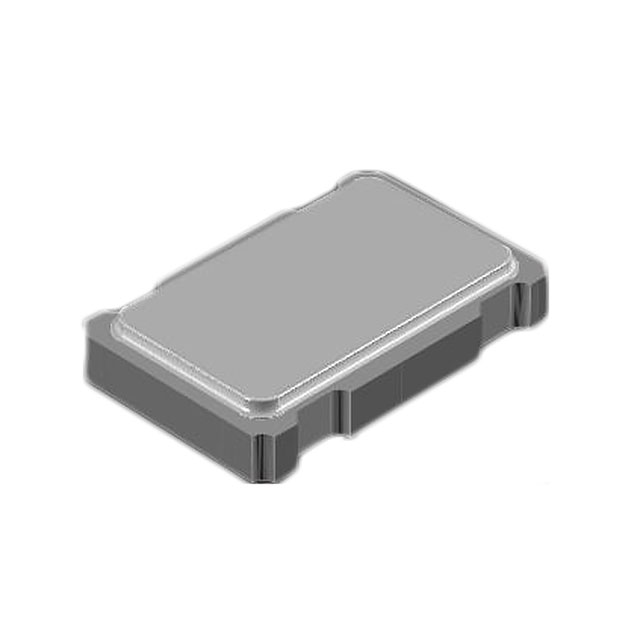
The ECS-P55-BN is a programmable surface-mount crystal oscillator manufactured by ECS Inc. It operates within a frequency range of 1 MHz to 125 MHz and utilizes HCMOS or TTL output logic levels. The device requires a 5V supply voltage and supports enable/disable functionality for power management. It features a total frequency stability of ±50ppm and is housed in a compact 4-SMD, no-lead package with dimensions of 5.00mm x 3.20mm. The component is designed for operation across an extended temperature range of -40°C to 85°C.
Verify that the specific order quantity meets the manufacturer's minimum requirements before finalizing purchase agreements. Confirm that the requested delivery timeline aligns with project schedules, as lead times may vary based on production status. Ensure that all technical specifications, including voltage and frequency parameters, match the system design requirements prior to procurement to avoid compatibility issues.
Select this component when a 5V supply voltage is required for the clock source application. Consider the ±50ppm stability specification against the timing tolerance requirements of the target circuit. Evaluate the physical footprint constraints to ensure the 5.00mm x 3.20mm package fits within the available board space. Verify that the operating temperature range of -40°C to 85°C covers the environmental conditions of the intended deployment scenario.
The ECS-P55-BN belongs to the ECS-P55 series of programmable SMD clock oscillators from ECS Inc. This series represents a line of small-form-factor timing solutions designed for modern electronic applications requiring flexible frequency configuration. The P55 series distinguishes itself through its ability to provide precise clock signals in a minimal footprint, catering to space-constrained designs.
The ECS-P55-A serves as a direct alternative within the same product family. Note that the ECS-P55-A operates within a commercial temperature range of 0°C to 70°C, whereas the ECS-P55-BN supports an industrial range of -40°C to 85°C. Ensure that the thermal requirements of the application are met when substituting between these variants.
 ECS-P55-BN

The activity of extra discounts on wholesale prices is in full swing…
Please fill in your contact information and we will send you the latest wholesale price list.