 ChipApex | Global Electronic Components Supplier
SEARCH
Search Product
Search Post
— IC芯片 | 连接器 | 传感器 | 被动器件 —
Search productSearch post
— IC芯片 | 连接器 | 传感器 | 被动器件 —
Consult the customer manager about the wholesale price.
consultation hotline:86-132-6715-2157
email:[email protected]
Contact the product manager for consultation. One-stop consultation is available.
Do you want a lower wholesale price? Please send us your inquiry and we will reply immediately.
The EP20K160EFC484-3N is an APEX 20KE Field Programmable Gate Array manufactured by Altera. It features a MultiCore architecture integrating look-up table logic, product-term logic, and embedded system blocks (ESBs). The device provides 6,400 logic elements, 40 ESBs, and up to 81,920 maximum RAM bits. It operates at a 2.5 V internal supply voltage with MultiVolt I/O support for 1.8 V, 2.5 V, 3.3 V, and 5.0 V levels. Encased in a 484-pin FineLine BGA package, it supports up to 316 user I/O pins and includes four phase-locked loops for clock management.
Verify the component status as the APEX 20K family is generally discontinued. Confirm availability through authorized distributors or surplus suppliers. Ensure compatibility with legacy design tools such as Quartus II for compilation and configuration. Check for moisture sensitivity handling requirements during storage and assembly.
Select this model for applications requiring high-density programmable logic with integrated memory structures. The 2.5 V core voltage requires appropriate power supply design. Consider the 484-pin FBGA package constraints for board layout. Verify that the 316 user I/O count meets interface requirements. Evaluate the need for specific I/O standards supported by the MultiVolt interface.
This part belongs to the APEX 20KE series, which extends the standard APEX 20K family with enhanced features like additional global clocks and advanced I/O standards. The 'E' suffix denotes the Enhanced version, while 'FC484' indicates the FineLine BGA package with 484 balls. The '-3' suffix specifies the speed grade, and 'N' typically denotes a non-RoHS or specific environmental variant depending on manufacturing date.
Direct pin-to-pin replacements are not explicitly listed in the provided datasheet. Consider newer Intel/Altera FPGA families such as Cyclone or Arria for modern designs, though architectural differences require redesign. Legacy APEX 20K variants like EP20K100E or EP20K200E share similar architectures but differ in logic density and I/O counts.
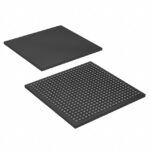 EP20K160EFC484-3N
The activity of extra discounts on wholesale prices is in full swing…
Please fill in your contact information and we will send you the latest wholesale price list.






